Tunog at Pantig
Children move from familiar spoken Filipino to tunog, simbolo, pantig, salita, parirala, pangungusap, pagbasa, pagsulat, pag-unawa and pagpapahayag.
Simple progression: /m/ → m → ma → mama → May mama.
Ginto at Pilak ng Wika brings Filipino and English reading and writing foundations into one coherent, child-centered teacher formation and implementation pathway.
The program does not treat Filipino and English as competing subjects. Both languages support communication, literacy, participation, confidence, learning and human development.
Ginto at Pilak ng Wika prepares teachers, parents, tutors, tutorial centers, schools and community educators to guide children from oral language and real experience toward sounds, symbols, syllables or sound combinations, words, sentences, reading, writing, comprehension and expression.
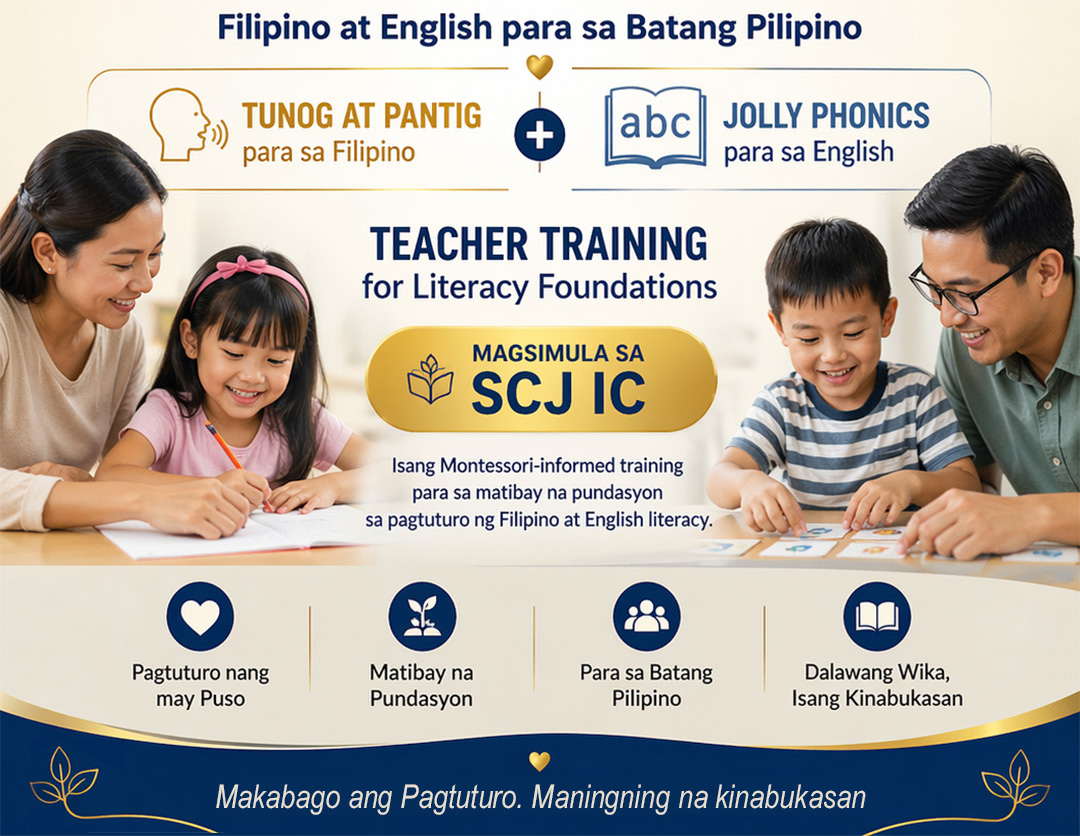
Children move from familiar spoken Filipino to tunog, simbolo, pantig, salita, parirala, pangungusap, pagbasa, pagsulat, pag-unawa and pagpapahayag.
Simple progression: /m/ → m → ma → mama → May mama.
Children move from listening and speaking to letter sounds, blending, segmenting, word reading, spelling, phrases, sentences, reading and writing.
Systematic synthetic phonics practices and the Jolly Classroom App may be used where appropriate as teacher-guided support.
The pathway combines a practical educational philosophy with language-specific literacy instruction.
Begins with real experience, Practical Life, Sensorial preparation, spoken language, tactile symbols, hand control and concrete-to-abstract learning.
Uses a gradual movement from demonstration to guided practice, supported practice and independent application.
Story, rhythm, movement, gesture, imagination and emotional warmth help children remember sounds, words and meanings.
Children listen, speak, see, touch, move, blend, build, read, write and express meaning through structured practice.
Ginto at Pilak ng Wika brings literacy foundations, Tunog at Pantig specialization, teacher certification, guided implementation, quality assurance and professional growth into one clear learning journey.
Join the SCJ Introductory Course or approved foundation entry pathway for Montessori-informed language, readiness, sound-symbol and concrete-to-abstract teaching.
Learn the Filipino sound-and-syllable progression, Stage 0 readiness, pantig building, beginning reading, writing and lesson preparation.
Participate fully, prepare a lesson plan, complete workshop activities and conduct introductory microteaching or demo teaching.
Start with one child, one family, a small group, a home tutorial, an online class, an existing center or a school-based support program.
Maintain records, learner portfolios, parent communication and progress evidence while participating in mentoring and TPQAI quality review.
Tunog at Pantig is more than a set of reading drills. It is a Montessori-informed and Filipino-adapted progression built around Filipino sounds, syllable patterns, word meaning and sentence work.
Sensorial, movement, fine-motor, pre-writing, sound-awareness and symbol-readiness activities for young learners.
Filipino letter sounds, pantig formation, controlled blending, word building, dictation, early reading and writing.
Guided exposure to additional sounds used in names, borrowed words and selected contemporary vocabulary.
Concrete and visual exploration of word functions through Montessori-informed grammar symbols.
More formal classification and understanding of Filipino parts of speech.
Sentence analysis involving simuno, panaguri, pandiwa, layon, attributes and adverbial extensions.
Certification is the entry specialization stage. It develops foundational understanding, lesson preparation and introductory teaching practice before higher implementation roles.
The recommended entry point is the SCJ Introductory Course / Literacy Foundations Course.
Experienced teachers who have not completed the introductory course may inquire about a bridging orientation or recognition of relevant prior training and experience.
The core certification is normally delivered through live online or face-to-face training with guided tasks.
Certification basis: full participation, workshop tasks, one simple lesson plan, introductory demo teaching and responsible use of the framework.
Preschool, early-grade and intervention teachers seeking a clearer Filipino and English literacy foundation pathway.
Families who want to support their own child through short, meaningful and developmentally appropriate activities.
Tutors who want a structured service beyond random worksheets, homework assistance and unplanned drills.
Centers that want to add a structured literacy foundation strand while keeping their own local identity.
Schools seeking staff development, learner support, enrichment, intervention and parent-engagement pathways.
Barangays, churches, associations and learning communities organizing child and family literacy support.
Training should lead to real practice. Participants may choose one realistic starting model and grow only when their confidence, learner evidence and support system are ready.
Begin with your own child and one to three additional learners through short, guided home sessions.
Start with one learner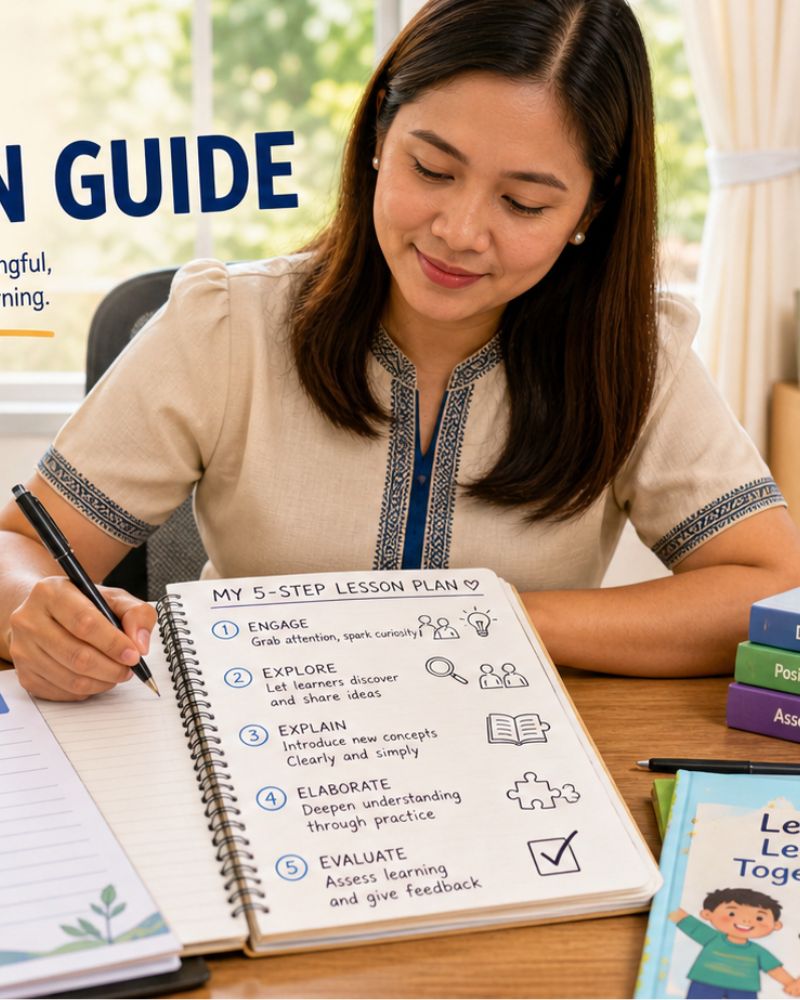
Give focused support to a learner who needs closer guidance, repetition, confidence-building and clear progress tracking.
Individual support
Organize four to eight learners for weekend, after-school, subdivision or community-based foundation sessions.
Group learning
Add Filipino and English literacy foundations to an existing center without replacing its brand or parent relationships.
Center partnership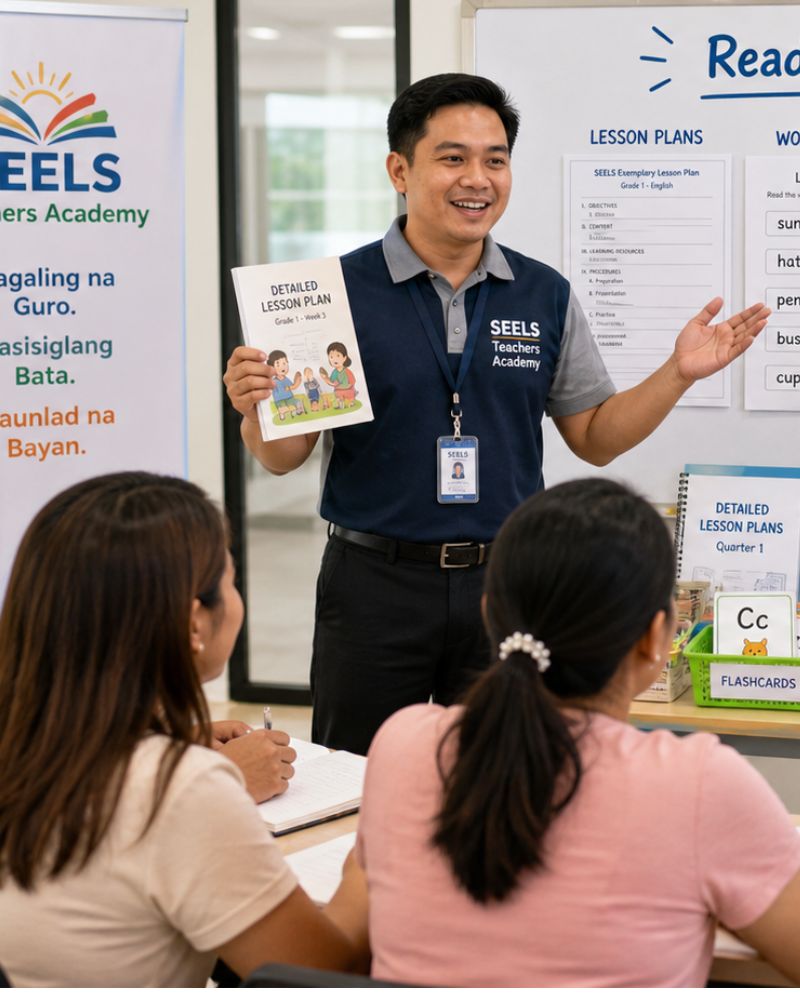
Offer parent-child sessions, early intervention, enrichment or project-based literacy support with schools and communities.
Institutional support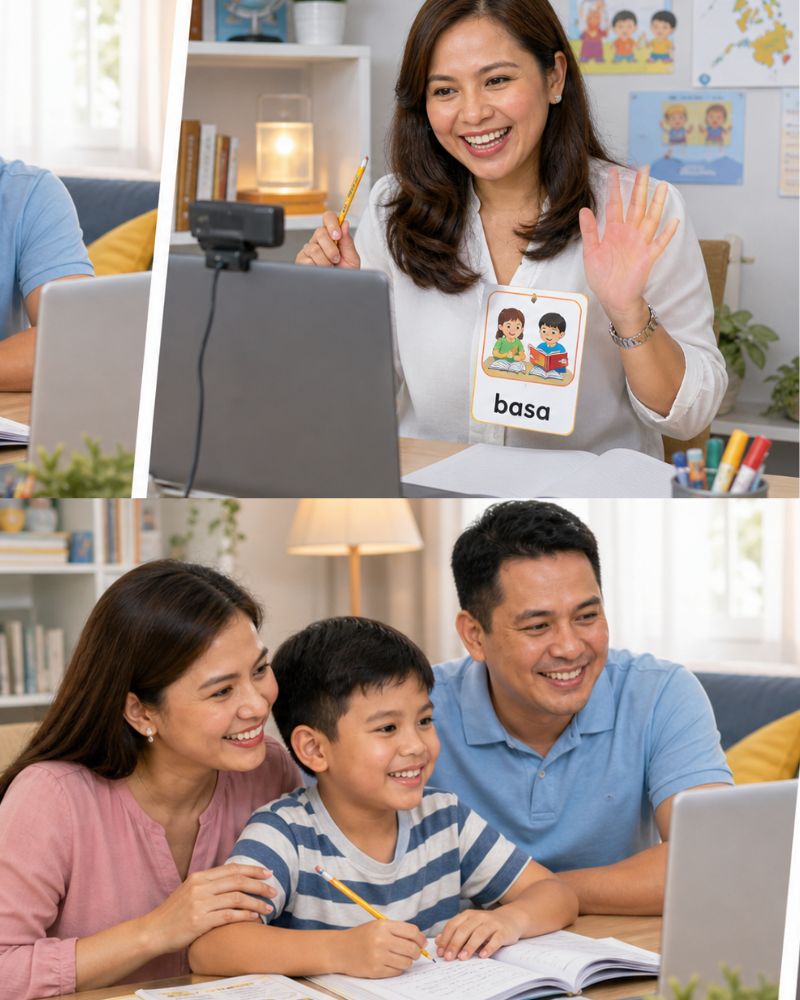
Deliver live online sessions supported by parent guidance, screen-friendly materials and digital learner documentation.
Flexible deliveryTPQAI may support face-to-face, home-based, online and hybrid providers that follow the curriculum, documentation and ethical practice requirements.
For learning centers, tutorial schools, small schools and institutions.
For trained teachers, parents, tutors and community educators.
For live-online tutors using digital records and child-safe practice.
For providers combining face-to-face and live-online delivery.
Attendance, lesson plans, learner outputs and progress evidence.
Clear expectations, learner updates, feedback and child protection.
Completed required preparation and signed the implementation commitment.
Started teaching learners and maintaining required records.
Submitted evidence of responsible practice and learner progress.
Demonstrated strong implementation and readiness to support others.
Higher pathways may be opened according to program readiness, participant goals and SEELS quality requirements.
Plans, teaches, assesses and documents classroom, tutorial, online or center-based lessons.
Conducts starting-point checks, intervention sessions, progress reporting and learner portfolio management.
Supports lesson observation, coaching, implementation quality and center development.
Develops live-online teaching, Google Workspace, digital documentation and app-integration skills.
Helps review records, portfolios, parent feedback and provider implementation evidence.
Requires deeper practice, facilitation skills, framework fidelity and SEELS authorization.
Inquire about the introductory course, Tunog at Pantig certification, school or center training, home-based implementation, online tutor preparation, TPQAI registration and after-training support.