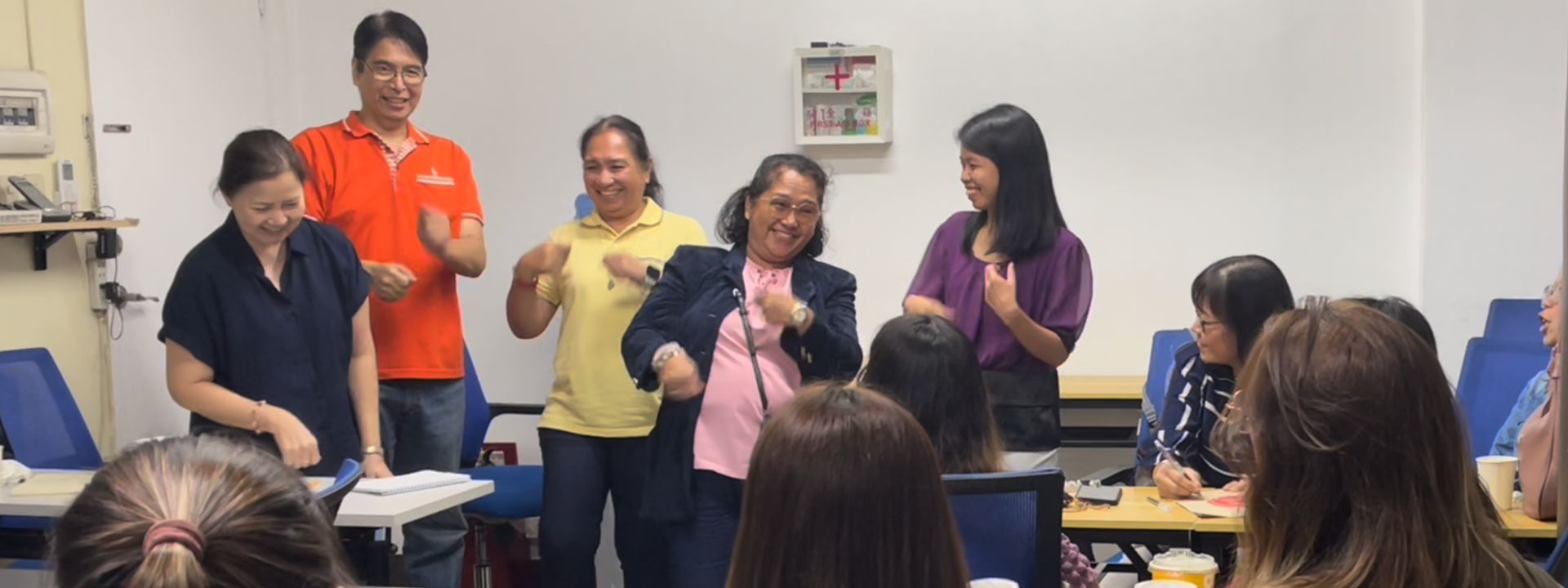
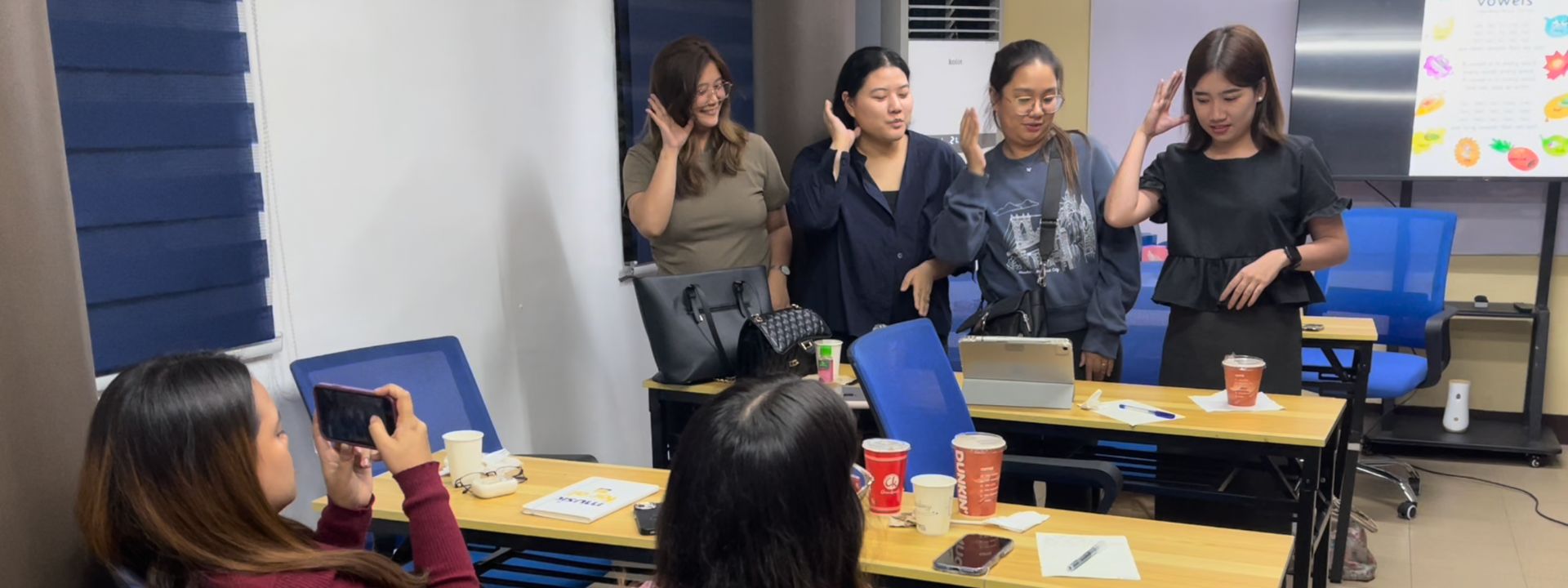
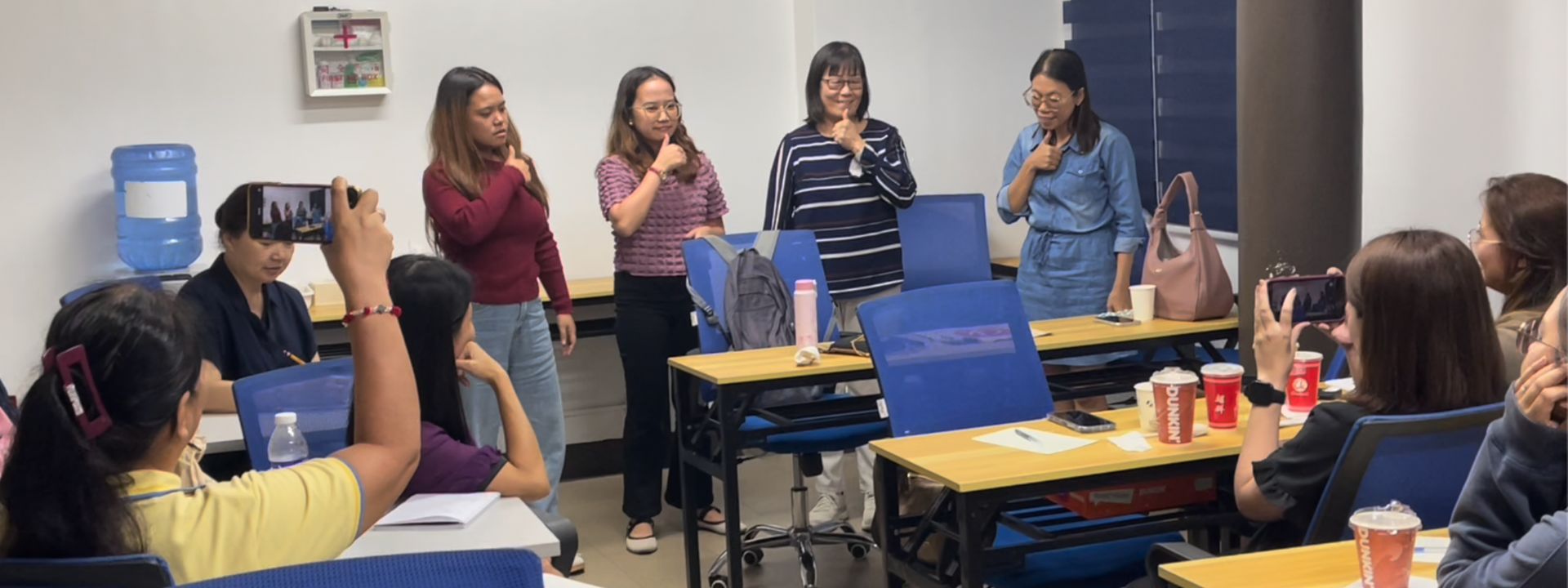
Teachers and learning providers participating in Jolly Classroom onboarding
English Literacy Training Pathway into SBRW

SEELS 6-Hour Jolly Classroom Onboarding Course

JCAT prepares the teacher. SBRW supports the classroom. Learn the foundations of Jolly Phonics, practise using the teacher-led Jolly Classroom platform, and prepare for responsible English reading-and-writing implementation. Individual educators, schools, tutorial centers, and learning providers can then move from training readiness into the SEELS Strong Beginning Reading & Writing (SBRW) classroom pathway for learner observation, parent communication, teaching application, progress evidence, and supported growth.

For younger learners: Bite-Size Montessori provides the shared Montessori-informed early-childhood foundation that can strengthen oral language, movement, sound awareness, Sensorial experience, fine-motor control and pre-writing preparation before more explicit English or Filipino Reading & Writing. It is not a required prerequisite for JCAT.

Watch this introduction to Jolly Classroom before exploring the six-hour SEELS onboarding course and implementation pathway.
Why Onboarding Comes First

Do not begin with a subscription alone. Begin with understanding.

A platform becomes useful only when the teacher understands the teaching sequence, knows how to guide children, can observe progress, and has a realistic setting in which to begin. The six-hour course therefore serves as the common entry point before individual practice or institutional implementation.

1
Understand the literacy foundation

Learn the core Jolly Phonics skills and the role of systematic, multisensory phonics in early English reading and writing.

2
Experience the teacher-led platform

Explore lessons, teaching notes, activities, worksheets, audio, assessment support, and progress information inside Jolly Classroom.

3
Choose a manageable first application

Prepare one practice lesson as an individual or one small pilot class as a participating school or tutorial center.

4
Prepare for SBRW implementation

When ready to teach enrolled learners, connect JCAT capability with the SBRW classroom pathway for starting-point observation, parent orientation, structured application, learner evidence, progress review, and continuing support.

Bite-Size Montessori shared early-childhood foundation supporting later Filipino and English Reading and Writing
Shared foundation before language-specific instruction. Bite-Size Montessori prepares early capacities that may later support both English and Filipino Reading & Writing.
Shared Early-Childhood Foundation • Primarily Approx. Ages 2.5–4

Bite-Size Montessori prepares early capacities. JCAT prepares the English teacher.

Before a young child is ready for more explicit sound-symbol work, blending, segmenting, handwriting, reading and writing, important capacities are already developing through movement, conversation, vocabulary, Practical Life, Sensorial experience, sound awareness and preparation of the hand.

Bite-Size Montessori is the shared Montessori-informed early-childhood foundation within the SEELS Strong Beginning Reading & Writing direction. It is designed primarily for young children around ages 2.5–4 and may support the capacities that later feed into both the English and Filipino language pathways.

Oral Language Conversation, vocabulary, stories, listening and meaningful interaction.
Movement & Independence Practical Life, purposeful movement, order, concentration and coordinated action.
Sensorial & Sound Awareness Matching, discrimination, sequencing, listening and noticing differences in sound and form.
Hand Preparation Fine-motor control, hand-eye coordination, pre-writing movement and readiness for later letter formation.
Important: Bite-Size Montessori is not a mandatory prerequisite for JCAT. Teachers, parents, schools and learning providers may enter JCAT according to their actual role, learner group and implementation need. BSM may stand alone as an early foundation or connect later to English through JCAT/Jolly Phonics and Filipino through Tunog at Pantig.
Two Connected Entry Tracks

Enter as an individual or bring a learning provider

The course uses one common foundation but leads to different first applications. Individual participants build personal teaching readiness. Schools and tutorial centers prepare an institutional pilot and implementation decision.

Track A

Individual Participant Entry

For teachers, teacher-candidates, education students, parents, home tutors, online tutors, center staff, and other adults who want a structured introduction before teaching or continuing to a deeper professional pathway.

  • Complete both three-hour sessions.
  • Prepare one guided Jolly Classroom practice lesson.
  • Use a simple observation and reflection template.
  • Use peer-supported practice to strengthen readiness before active SBRW implementation.
  • When teaching enrolled learners, explore SBRW implementation; continue to TEYL, TESOL, DME, practicum, or partner-provider opportunities as appropriate.
Track B

School or Tutorial-Center Entry

For owners, school leaders, academic coordinators, tutorial-center managers, program heads, and teacher teams considering Jolly Classroom as part of a structured literacy service.

  • Enroll at least one responsible leader or implementing teacher.
  • Identify the target learner group and intended teaching setting.
  • Prepare one small SBRW English-literacy pilot rather than an immediate full rollout.
  • Clarify SBRW teacher roles, parent communication, learner records, and current access or subscription requirements.
  • Review evidence before renewal, expansion, or institutional partnership.
Six Hours, Two Guided Sessions

From phonics foundations to guided platform practice

The course is intentionally short and practical. It helps participants understand what Jolly Classroom is, how the teacher uses it, and what should be prepared before working with children.

Introductory Jolly Phonics foundations session
Session 1 · 3 Hours

Jolly Phonics Foundations and Responsible Use

Build a clear introductory understanding of systematic synthetic phonics and the five core Jolly Phonics skills before opening the digital platform.

  • Purpose of systematic synthetic phonics
  • Letter sounds and letter formation
  • Blending for word reading
  • Segmenting for spelling and writing
  • Tricky words and cumulative practice
  • Multisensory stories, actions, songs, and movement
  • Teacher observation, adaptation, and learner support
  • Developmental readiness: how oral language, movement, sound awareness and hand preparation support later explicit phonics
  • Introduction to Jolly Classroom as the digital teaching environment
Jolly Classroom demonstration and guided practice session
Session 2 · 3 Hours

Jolly Classroom Demonstration and Guided Practice

Move through the platform as a teacher, practise a selected lesson, examine assessment and progress features, and prepare a first application suitable to your entry track.

  • Account, class, and teacher-view orientation
  • Lesson sequence, notes, audio, animations, and activities
  • Worksheets and supporting teacher resources
  • Classroom display and device considerations
  • Teacher-led delivery and learner interaction
  • Assessment and progress-information orientation
  • Practice lesson or pilot-planning clinic
  • Subscription, trial, after-training, and partnership next steps
Expected onboarding output: an individual participant prepares one practice lesson and reflection; a school or tutorial center prepares one small-pilot implementation outline with a target learner group, responsible teacher, schedule, resources, learner records, and review point. Participants leave with a clear distinction between JCAT as teacher preparation and SBRW as the classroom implementation pathway. Jolly Phonics through Jolly Classroom becomes the English instructional engine inside the broader SEELS SBRW system rather than a stand-alone app activity.
JCAT = English Literacy Entry Pathway

JCAT prepares the teacher. SBRW supports the classroom.

The six-hour JCAT course develops adult readiness: understanding systematic phonics, navigating Jolly Classroom, practising teacher-led lessons, and preparing a realistic first use. That is different from running an ongoing child literacy service.

SEELS Strong Beginning Reading & Writing (SBRW) is the broader SEELS classroom implementation system. Within SBRW, Jolly Phonics through Jolly Classroom is the major English literacy instructional engine. SBRW adds the implementation layer around it: learner starting-point observation, speaking-and-listening preparation, reading-and-writing application, parent orientation, learner evidence, progress communication, quality support, and local adaptation.

Shared foundation beneath both language pathways: Bite-Size Montessori supports early oral language, movement, Sensorial discrimination, sound awareness and hand preparation. When learners are ready for more explicit instruction, JCAT/Jolly Phonics develops the English pathway while Tunog at Pantig develops the Filipino pathway. SBRW provides the wider classroom implementation and evidence system.
JCAT — Prepare the Teacher Learn phonics foundations, use Jolly Classroom responsibly, practise lesson delivery, and determine implementation readiness.
SBRW — Support the Classroom Organize learner entry, lesson application, progress evidence, parent communication, review points, and continuing support.
English Literacy Pathway Jolly Phonics through Jolly Classroom supports sounds, letter formation, blending, segmenting, reading, spelling, and writing within the SBRW implementation framework.
Filipino Literacy Pathway Tunog at Pantig is the SEELS Filipino literacy pathway within SBRW, giving schools and learning providers a distinct language-appropriate route for Filipino reading and writing.
Program identity: Jolly Phonics and Jolly Classroom are products of Jolly Learning Ltd. JCAT is a SEELS onboarding and implementation-support course. SBRW and Tunog at Pantig are SEELS implementation frameworks and resources. SBRW is not an official Jolly Learning product, certification, franchise, or guarantee of learner outcomes.
After the Course

Start a Supported SBRW English-Literacy Pilot

Move from JCAT teacher preparation into responsible SBRW classroom implementation. Begin with a manageable group of learners, follow a structured teaching plan, receive mentoring, and document learner progress before expanding the program.

Training is the beginning—not the final step.

The Jolly Classroom App Training helps participants understand the platform, its lessons, teaching resources, and classroom applications. The optional SEELS SBRW Pilot Implementation pathway helps trained participants apply that knowledge with real children in a home, tutorial center, learning center, preschool, or school while using Jolly Classroom as the English literacy teaching engine.

The pilot is designed to strengthen teacher confidence, establish a consistent teaching routine, observe how learners respond, and identify the support needed before wider implementation.

Participants are encouraged to start small, teach consistently, and make decisions based on actual classroom evidence rather than rushing to complete the entire program.

What the SBRW Pilot May Include

The exact support may be adjusted according to the implementer, number of learners, delivery setting, available devices, and agreed pilot plan.

01

Pilot-Readiness Consultation

Review the learner group, teacher availability, class schedule, device setup, classroom conditions, and implementation goals.

02

Platform and Class Setup

Receive guidance in organizing the Jolly Classroom account, class profile, lessons, worksheets, teaching resources, and device use.

03

Learner Starting-Point Check

Observe listening, sound awareness, oral blending, segmenting, letter-formation readiness, participation, and previous phonics experience.

04

Implementation Plan

Prepare an 8- to 12-week calendar covering lessons, review periods, reinforcement activities, learner checks, and parent updates.

05

Supervised Teaching Practice

Apply the program with real learners while maintaining a simple log of attendance, lessons, learner response, difficulties, and planned adjustments.

06

Mentoring and Lesson Feedback

Receive coaching on lesson pacing, teacher language, grouping, classroom management, learner support, and appropriate use of the app.

07

SBRW Parent or Caregiver Orientation

Use the Strong Beginning Reading & Writing parent framework and brochure to explain systematic phonics, the child's lesson journey, progress expectations, home support, attendance, review, and the importance of avoiding unnecessary pressure.

08

End-of-Pilot Review

Review learner progress, teacher implementation, areas requiring reinforcement, and readiness to continue, repeat, or expand the program.

09

Pilot Implementation Report

Document the learner profile, schedule delivered, skills covered, classroom observations, teacher reflection, challenges, and next recommendations.

Flagship Implementation Resource: Strong Beginning Reading & Writing

SBRW gives pilot teachers and learning providers a comprehensive classroom implementation and parent-facing reference covering the child's “why” and “how,” teacher-led lesson routines, a parent-visible syllabus, 3-, 6-, 9-, and 12-month progress checkpoints, Montessori-informed literacy foundations, and country/site adaptation. It should support honest orientation and enrollment rather than guarantees of fixed reading outcomes.

Open SBRW Program

Choose an Appropriate Pilot Pathway

The pathway should match the capacity of the trained implementer and the setting where the program will be introduced.

Pathway 1

Home and Tutorial SBRW Pilot

A small-scale entry pathway for trained teachers, home tutors, independent educators, parents with teaching preparation, and tutorial centers.

  • Begin with a manageable group of learners
  • Use a simple weekly teaching schedule
  • Receive setup and implementation guidance
  • Maintain learner and lesson records
  • Prepare for possible continuation or growth
Pathway 2

School and Learning-Center SBRW Pilot

An institutional pathway for preschools, private schools, tutorial centers, community programs, and learning centers introducing the SBRW English literacy pathway within an organized class setting, using Jolly Classroom as a major instructional tool.

  • Implement in one initial site or selected class
  • Assign trained teachers or pilot implementers
  • Orient school leaders and participating families
  • Review teaching and learner evidence
  • Prepare recommendations for wider implementation

From Training to Evidence-Informed Practice

The pilot follows a clear implementation journey rather than leaving graduates to begin without guidance.

1. Complete Training Learn the platform, lessons, tools, and teaching approach.
2. Prepare the Pilot Identify learners, schedule, devices, space, and support needs.
3. Explain to Parents Use SBRW to explain the learning journey and realistic expectations.
4. Teach and Observe Deliver lessons and record learner response and progress.
5. Receive Guidance Use mentoring and feedback to strengthen implementation.
6. Review and Decide Continue, improve, repeat, or prepare for responsible expansion.

Ready to apply your training with real learners?

Start with a manageable pilot, receive practical implementation support, and build your next step from actual classroom experience and learner evidence.

Schedule, Fee and Enrollment

Complete the onboarding course in one weekend

The SEELS Jolly Classroom Onboarding Course consists of two guided three-hour sessions, for a total of six training hours.

Live-Online Weekend Schedule

Saturday and Sunday

1:00 PM–4:00 PM

Two consecutive three-hour sessions conducted over one weekend.

Saturday Jolly Phonics foundations and teaching sequence
Sunday Jolly Classroom guided practice and implementation planning

Exact batch dates and online access details are provided after registration and payment verification.

Training Fee
Exploratory group training · 6-hour onboarding course ₱2,500

The fee covers two guided live-online sessions, course orientation, practical Jolly Classroom exploration, and a basic implementation planning activity. It prepares the participant for the next decision; it is not the child’s tuition fee and does not by itself activate an ongoing SBRW classroom arrangement.

Jolly Classroom subscription

A paid Jolly Classroom subscription, licence, renewal, or ongoing SBRW implementation arrangement is not automatically included unless the announced package expressly states otherwise. Active implementation requirements are confirmed separately before a teacher or provider begins serving enrolled learners.

Enroll Now
Payment and Refund Policy

Confirming and managing your training place

  • Full payment confirms the participant’s place in the selected weekend batch.
  • Cancellation requests received at least seven days before the first session may be transferred once to another available batch or refunded, less applicable payment-processing charges.
  • Payments are non-refundable within seven days of the starting date, after the course has begun, or in cases of non-attendance.
  • A participant who cannot attend may request one batch transfer, subject to available places and approval by SEELS.
  • If SEELS cancels the course, participants may transfer their payment to another available batch or request a full refund.
An Evidence Concept Inside SBRW

Keep the Literacy Foundations Piggy Bank as a learning metaphor—not a competing program

The SEELS Literacy Foundations Piggy Bank remains useful for explaining how small demonstrated skills accumulate over time. Within the revised program architecture, however, it functions as an SBRW learner-evidence concept. The public implementation destination is SBRW; the Piggy Bank helps teachers and families understand how progress becomes visible.

1

Deposit a Demonstrated Skill

A sound recognized, a letter formed, a word blended, a spelling segmented, or a sentence read or written becomes meaningful when the learner can actually demonstrate it.

2

Make Progress Visible

Teachers can use observation notes, learner work, reading and writing samples, and review records to explain what is becoming secure and what still needs practice.

3

Use Evidence for the Next Step

SBRW uses learner evidence to guide review, continuation, additional support, parent communication, and responsible decisions about expansion.

1

Teach

Present a clearly defined literacy skill through a structured lesson.

2

Observe

Notice what the learner can hear, say, recognize, blend, segment, read, or write.

3

Record

Keep useful evidence rather than counting app lessons alone.

4

Share

Explain progress and realistic next steps clearly to the learner’s family.

5

Improve

Use the evidence to plan review, support, or the next learning target.

Skills, not pesos: the Literacy Foundations Piggy Bank is a SEELS metaphor for accumulating demonstrated literacy capabilities. It is not a financial account, not a separate child-enrollment product, and not a built-in Jolly Classroom feature. The public classroom implementation pathway is SEELS Strong Beginning Reading & Writing (SBRW).
What Happens After JCAT

Training readiness can lead into SBRW implementation

Completion of the six-hour course prepares a participant to make a responsible next-step decision. It does not automatically activate a classroom, confer official Jolly certification, guarantee employment, or authorize an immediate full-center rollout.

Individual Educator Pathway

JCAT → practice → SBRW implementation

1
Complete JCAT

Attend both sessions and participate in guided Jolly Classroom practice.

2
Rehearse before enrolling learners

Prepare and practise a clear lesson sequence, teacher language, materials, and reflection.

3
Enter SBRW when ready to implement

Use the appropriate implementation arrangement for learner entry, parent orientation, teaching, evidence, and review.

4
Continue professional formation

Deepen capability through TEYL, TESOL, Montessori/DME, practicum, peer review, or other suitable SEELS pathways.

School & Learning-Provider Pathway

JCAT → readiness → SBRW pilot → evidence-led expansion

1
Prepare responsible people

Enroll the owner, leader, coordinator, or implementing teacher who will carry the pilot.

2
Confirm SBRW readiness

Identify learner group, schedule, teacher roles, devices, space, parent communication, records, and current access requirements.

3
Run one SBRW English-literacy pilot

Teach consistently, observe learners, keep evidence, communicate with families, and receive appropriate support.

4
Review before expanding

Examine learner evidence, teacher implementation, parent experience, cost, support needs, and readiness for additional classes or teachers.

The Platform Participants Will Explore

Jolly Classroom is the major English instructional engine used within SBRW

Jolly Learning describes Jolly Classroom as a web-based digital teaching toolkit with an extensive lesson sequence, multisensory activities, teacher guidance, worksheets, assessment support, and class-progress information. JCAT prepares adults to use that toolkit responsibly. Within SBRW, the platform supports explicit English phonics while the wider SEELS implementation system adds oral-language preparation, off-screen application, learner observation, parent communication, evidence review, and local classroom support.

150+ lessons

A substantial phonics and literacy sequence with activities and audio.

Teacher guidance

Lesson plans, teaching notes, and on-screen support while the teacher remains in control.

Multisensory activities

Stories, songs, flashcards, formation, blending, segmenting, and interactive practice.

Assessment and progress

Tools for checking phonics knowledge, identifying support needs, and viewing progress information.

Program identity: Jolly Classroom and Jolly Phonics are products of Jolly Learning Ltd. The six-hour JCAT course is a SEELS onboarding and implementation-support course. SBRW is the SEELS classroom implementation system in which Jolly Classroom can serve as the major English literacy teaching engine. Neither JCAT nor SBRW replaces official Jolly Learning training or confers the title “Certified Jolly Phonics Teacher.”
Teacher-led Jolly Classroom lesson with progress documentation
Teacher Arianne of SEELS Teachers Academy shares her experience in implementing the Jolly Classroom App with the teachers and staff of Scuola Bambini Dei Santa Barbara, Iloilo.
Clear Course Boundaries

What onboarding includes—and what requires a separate arrangement

Included in the 6-Hour Onboarding Course

  • Introductory Jolly Phonics foundations
  • Jolly Classroom platform orientation
  • Guided lesson demonstration and practice
  • Assessment and progress-feature introduction
  • Individual lesson or institutional pilot planning
  • Orientation to SBRW as the English-literacy classroom implementation pathway
  • Introduction to the Literacy Foundations Piggy Bank as an SBRW learner-evidence concept
  • Direction toward available after-training and advanced pathways
  • SEELS certificate of completion or participation, subject to announced requirements

Confirmed or Arranged Separately

  • Paid Jolly Classroom subscription, licence, or renewal
  • Official Jolly Learning training or certification
  • One-to-one coaching or formal teaching assessment
  • On-site school visits and customized staff training
  • Practicum placement or classroom access
  • Employment, teacher referral, or institutional endorsement
  • Devices, displays, internet, printing, and teaching materials
  • TEYL, TESOL, DME, or other advanced-program tuition
Online and face-to-face Jolly Classroom onboarding
SEELS, as a Jolly Classroom distributor, provides live-online and face-to-face Jolly Classroom onboarding and implementation support. Official Jolly Phonics training is offered separately by Coral George, an official Jolly Phonics trainer, and may be arranged online or face-to-face in the Philippines upon request.
Flexible Delivery

Two sessions designed for practical participation

Batches may be delivered online or face-to-face. Current dates, venue, course fee, trial arrangements, and package inclusions are confirmed in the official registration announcement or inquiry form.

Online live course

Suitable for individuals and institutions joining from different locations.

Face-to-face course

Suitable for guided group practice, school teams, and local demonstration events.

Individual enrollment

One adult participant may enter without representing an institution.

Institutional enrollment

A school or center may enroll its owner, coordinator, teacher, or implementation team.

Why SEELS Uses This Entry Model

Responsible growth begins with prepared people and a small first step

SEELS is a financially disciplined social enterprise. The course is designed to make entry accessible while protecting educational quality: participants first learn, practise, and plan; institutions begin with a pilot; evidence guides expansion; and sustainable services help support continuing teacher and community-literacy work.

SEELS implementation principle: do not sell the app and leave the teacher alone. JCAT prepares the teacher; SBRW supports the classroom. Begin with understanding, organize the first use, make learner progress visible, communicate with parents, review what happens, and strengthen the provider before expanding.
Frequently Asked Questions

Understanding the course and entry pathways

Is this an official Jolly Phonics certification course?

No. This is a SEELS onboarding and implementation-support course. Official Jolly Phonics training or certification is separate and must be delivered or authorized through Jolly Learning’s approved arrangements. The SEELS certificate should identify the activity as Jolly Classroom onboarding or support training, not as certification as a Jolly Phonics teacher.

Can a student or individual enroll without representing a school?

Yes. Education students, teacher-candidates, teachers, parents, home tutors, online tutors, and other adult participants may enroll through the Individual Participant Track. The course is an adult onboarding program; it is not a six-hour course for children.

Can a school or tutorial center use this as its first step?

Yes. A school or tutorial center may begin by enrolling an owner, leader, coordinator, teacher, or small team. The institution may then join a readiness discussion, identify one target learner group, consider current licensing terms, prepare a small pilot, and review evidence before expanding.

Is a Jolly Classroom subscription included in the course fee?

Not automatically. Guided trial or sample access may be introduced during onboarding, subject to the current Jolly Learning offer and SEELS arrangements. Any paid subscription, licence, renewal, local tax, or package inclusion must be confirmed in writing before payment.

What is the Literacy Foundations Piggy Bank?

It is a SEELS learning-evidence metaphor used inside the SBRW implementation system. A demonstrated literacy skill can be treated as a “learning deposit” that is observed, documented, communicated, and used to plan the next step. It is not a financial account, not a separate child-enrollment program, and not an official Jolly Classroom product feature.

Does completion allow someone to call themselves a certified teacher?

No. Completion records participation in the SEELS onboarding course. It does not provide Philippine teacher licensure, official Jolly Phonics trainer status, guaranteed employment, or automatic institutional endorsement.

What support may be available after the course?

Depending on the batch and current SEELS arrangements, graduates may receive access to shared templates, peer exchange, selected group mentoring, guided demonstration activities, implementation planning, or referral to the SEELS Practice-to-Partnership Pathway. Individualized, on-site, or resource-intensive services may require separate arrangements.

What is the Strong Beginning Reading & Writing (SBRW) pathway?

SBRW is the SEELS flagship classroom implementation system for strong beginning reading and writing. For the English pathway, Jolly Phonics through Jolly Classroom provides the major structured phonics teaching engine. SBRW adds learner starting-point observation, speaking-and-listening preparation, off-screen reading-and-writing application, parent guidance, progress-review checkpoints, Bite-Size Montessori-informed shared early foundations where appropriate, learner evidence, and local pacing considerations.

It is not an official Jolly Learning product, certification, franchise, or guarantee of learner outcomes. It is a SEELS implementation system designed to connect teacher preparation with responsible child enrollment, teaching, learner evidence, parent communication, progress review, and continuing classroom support.

Is JCAT the same program as SBRW?

No. JCAT is the adult teacher-training and onboarding entry pathway. SBRW is the ongoing classroom implementation system. A participant can complete JCAT for exploration and professional development without immediately operating an SBRW class. Active implementation with enrolled learners requires the appropriate current SBRW, access, licensing, provider, and local-service arrangements to be confirmed separately.

How does Bite-Size Montessori relate to JCAT and Jolly Phonics?

Bite-Size Montessori and JCAT serve different but connected purposes. Bite-Size Montessori provides a shared Montessori-informed early-childhood foundation through oral language, movement, Practical Life, Sensorial experience, sound awareness, fine-motor development and pre-writing preparation.

JCAT prepares adults to use Jolly Phonics through Jolly Classroom for more explicit English Reading & Writing when the learner and teaching context are ready. Bite-Size Montessori is not a required prerequisite for JCAT; the appropriate starting point depends on the child, teacher and learning setting.

Where does Tunog at Pantig fit?

Within the SEELS literacy architecture, JCAT prepares teachers for the English literacy pathway using Jolly Phonics through Jolly Classroom. Tunog at Pantig is the SEELS Filipino literacy pathway. Both can connect to the broader SBRW implementation system while remaining language-appropriate teaching pathways.

What advanced pathways may follow the onboarding course?

Depending on the participant’s role and readiness, possible next steps may include TEYL, the SEELS 120-Hour TESOL, Digital Montessori Education, practicum preparation, the Practice-to- Partnership Pathway, or a school and tutorial-center development discussion. Each pathway has separate requirements and fees.

Choose Your Entry Point

Start where the need is clearest.

Explore Bite-Size Montessori when younger children need a stronger shared early foundation. Begin with JCAT when the adult needs preparation for structured English Reading & Writing through Jolly Phonics and Jolly Classroom. Move into SBRW when the teacher, learners and learning provider are ready for sustained classroom implementation, learner evidence and parent communication.