
Shared Foundation • Approximately Ages 2.5–4
Bite-Size Montessori
A Montessori-informed shared foundation for Strong Beginning Reading & Writing—preparing movement, independence, sensorial awareness, oral language, sound awareness, fine-motor control, early writing, reading readiness and number readiness before more explicit Filipino or English instruction.
Bite-Size Montessori offers a shared early foundation for language, movement, independence and later Reading & Writing. The child's age, readiness, language experience, interests and developmental needs guide the next step.
Why Bite-Size Montessori?
Start early—because stronger Reading & Writing foundations can change what comes later.
The Philippines continues to face a serious gap between basic literacy and functional literacy. The 2024 Functional Literacy, Education and Mass Media Survey reported that while 90.0% of Filipinos aged 5 years and over had basic literacy, functional literacy among those aged 10–64 was 70.8%. SEELS sees early childhood as an important place to contribute: strengthen language, listening, movement, sound awareness, hand preparation and meaningful early Reading & Writing experiences before difficulties become harder to address later.
1
Respond Early
Functional literacy is not solved by one course or one method. But stronger early language and Reading & Writing foundations can give children a better starting point for later comprehension, communication and learning.
2
Make Montessori More Accessible
SEELS wants more families, teachers, tutorial centers, schools and communities to experience practical Montessori principles—respect for the child, observation, independence, purposeful movement, the prepared environment, Sensorial learning and rich language experiences—without requiring every setting to become a full Montessori school.
3
Build Public Awareness
Bite-Size Montessori also serves as a public-awareness pathway. It helps adults understand that Montessori is more than special materials: it is a philosophy of child development, careful observation, purposeful activity and preparation that can strengthen the way we support young learners.
The SEELS Response
Bring the basics of Montessori closer to more children—and connect them to a Strong Beginning in Reading & Writing.
Through Bite-Size Montessori, SEELS begins with the child rather than with a worksheet, app or reading target. We prepare the foundations first, then connect children and adults to appropriate Filipino and English Reading & Writing pathways as readiness develops.
Important: Bite-Size Montessori is one early-childhood contribution to a much larger national literacy challenge. SEELS does not claim that Montessori or this program alone can resolve functional illiteracy.
Shared Foundation for Strong Beginning Reading & Writing
A Montessori-informed foundation for Filipino, English and lifelong learning.
Bite-Size Montessori prepares capacities that support learning across languages. Filipino and English later require their own sound systems, word-building patterns, teaching sequences and materials, but both benefit from the same early groundwork in movement, order, oral language, sensory discrimination, attention and hand preparation.
1
Prepare the Child
Build independence, coordination, concentration, sensory discrimination, vocabulary, listening and the hand's readiness for purposeful work.
2
Choose the Language Path
When readiness becomes visible, continue with developmentally appropriate Filipino or English Reading & Writing—or both—without treating one language as superior to the other.
3
Document the Beginning
Observe what the child can already do, preserve work samples and note meaningful progress rather than rushing through a fixed academic checklist.
The 0–6 Developmental Continuum
Strong beginnings start before the first formal reading lesson.
SEELS uses birth to six as the wider developmental window for language and early learning, while Bite-Size Montessori focuses primarily on the transition into purposeful, hands-on preparation around approximately ages 2.5–4. Formal reading and writing are not forced simply because a child reaches a birthday.
Relationships & Spoken Language
Responsive conversation, songs, stories, naming, movement, routines, secure relationships and rich real-world experiences form the earliest language environment.
Note: This developmental period provides context for the framework; it is not presented here as a formal Bite-Size Montessori course for infants.
Bite-Size Montessori Shared Foundation
Practical Life, Sensorial experiences, oral language, sound awareness, fine-motor control, pre-writing, matching, sequencing, counting and other concrete readiness experiences.
More Explicit Reading & Writing
Children who are ready may move more deliberately into sound-symbol work, word building, handwriting, blending, segmenting, syllables, reading and writing according to the language being taught.
What Bite-Size Montessori Builds
Small experiences that prepare larger learning.
The program does not reduce Montessori to worksheets or isolated academic drills. It uses purposeful, manageable activities to prepare the whole child for language, Reading & Writing, number and everyday independence.
Practical Life
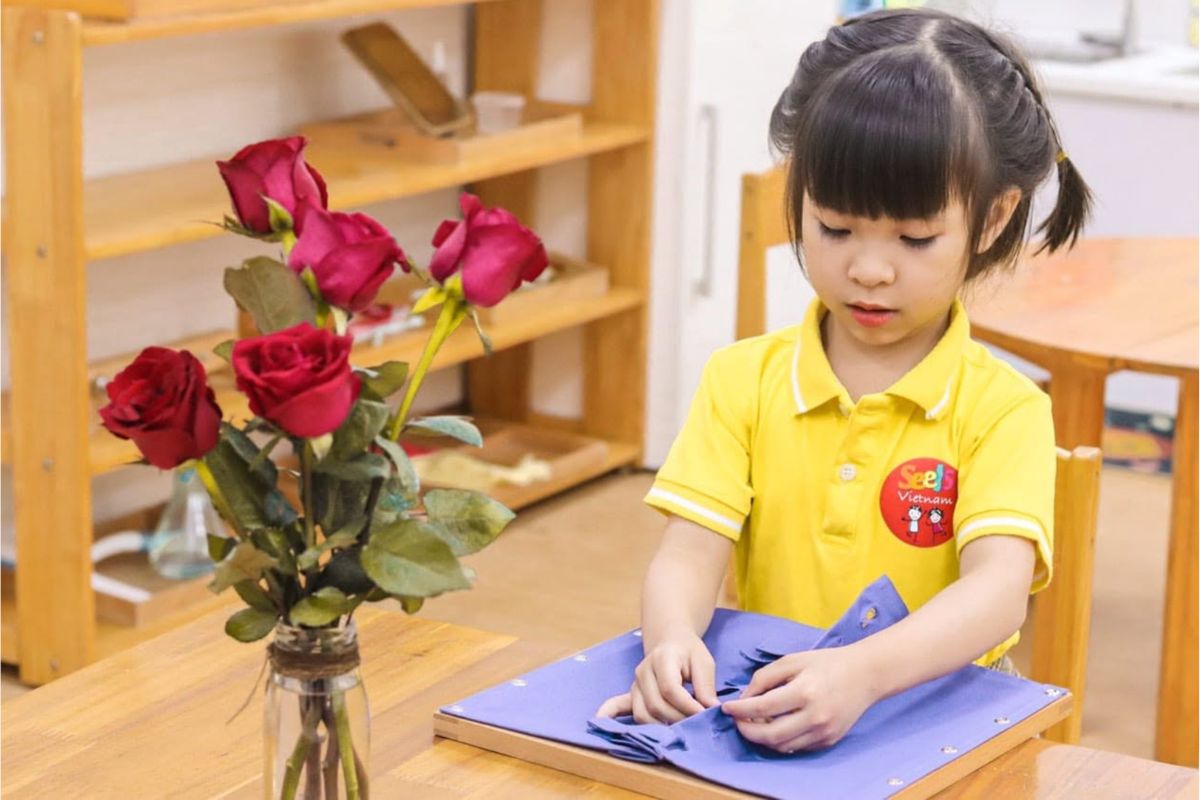
Pouring, transferring, sorting, opening, closing, carrying, cleaning and care-of-self routines that support order, coordination, independence, concentration and controlled movement.
Sensorial Preparation
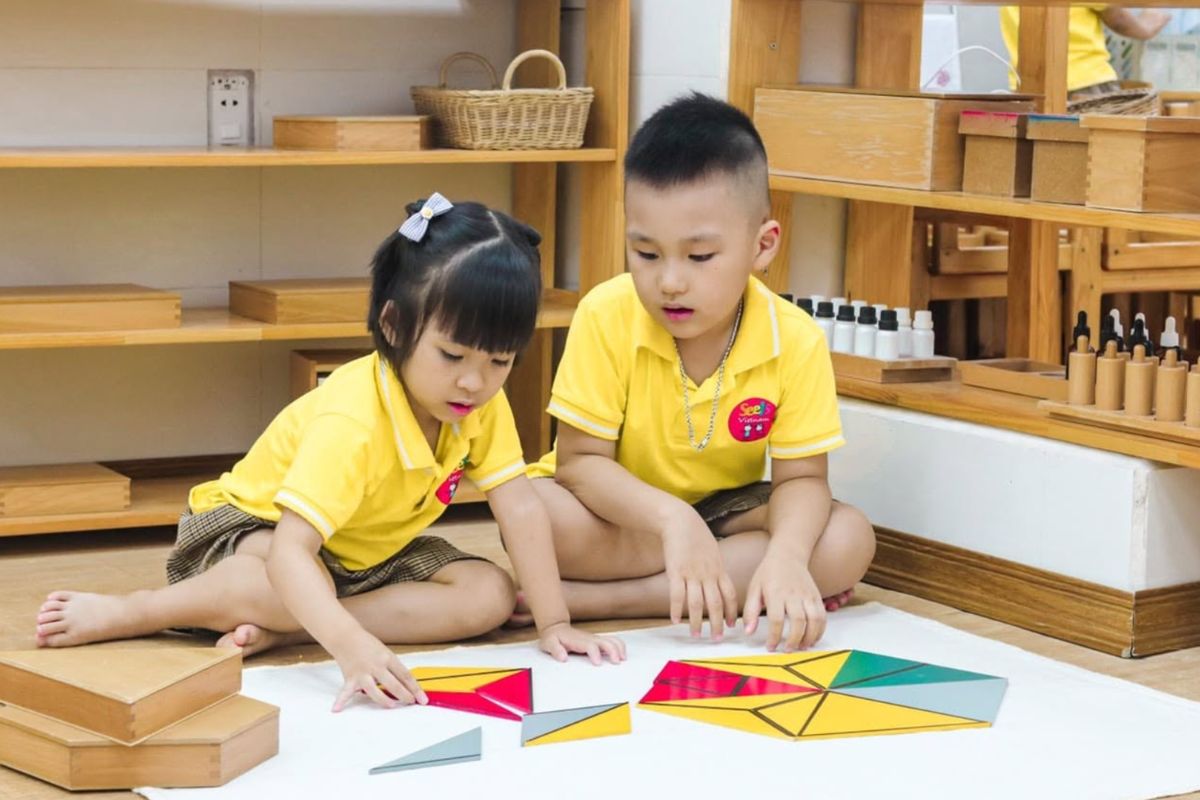
Matching, grading, comparing, sequencing and discriminating qualities such as size, shape, texture, sound and visual differences—the kind of careful noticing later used in symbol learning.
Oral Language
Conversation, naming, classified vocabulary, stories, songs, listening and expressive language that give meaning to the words children will later encounter in print.
Sound Awareness
Listening closely to environmental and speech sounds, noticing initial and other meaningful sounds, and preparing the ear before expecting the child to manipulate written symbols.
Hand & Pre-Writing Preparation
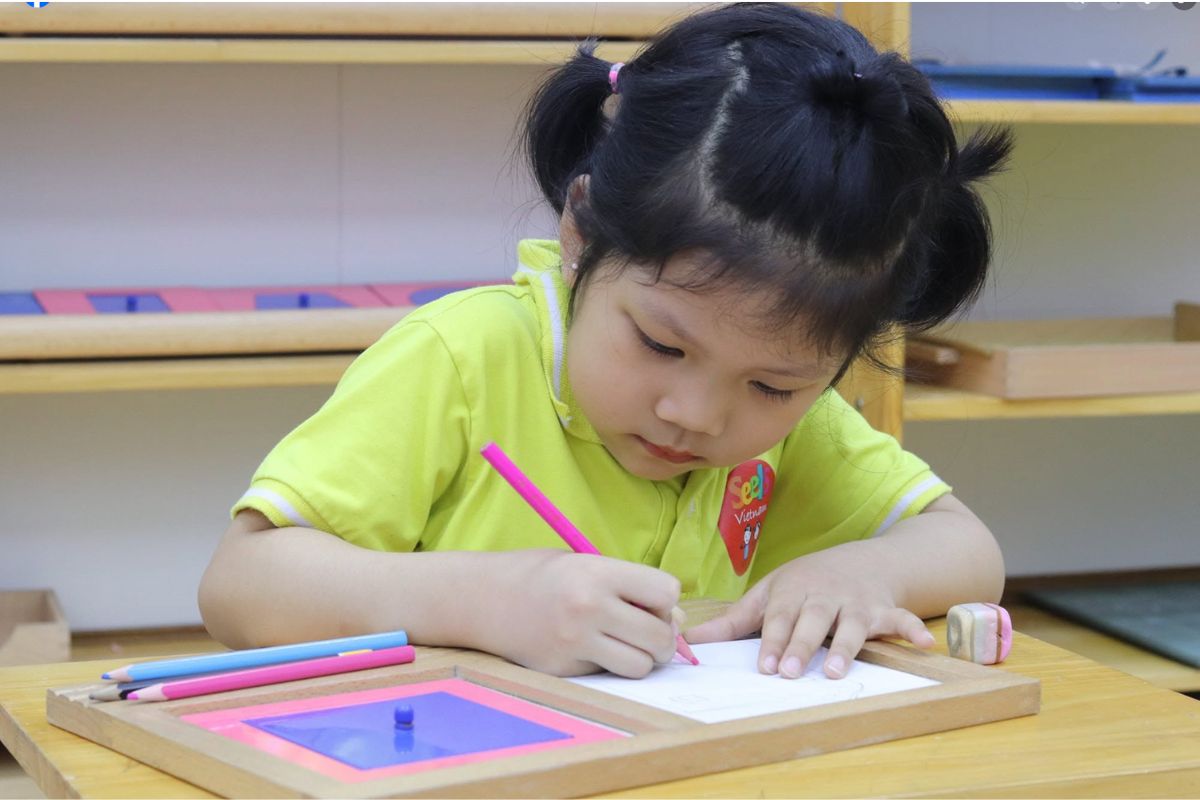
Activities that refine the fingers, wrist, hand-eye coordination, controlled movement, tracing and other indirect preparations needed before conventional writing becomes demanding.
Number & Order Readiness
Order, one-to-one matching, sequencing, counting, quantity awareness, number symbols and concrete-to-abstract preparation that help the child encounter early mathematics through meaningful experience.
Language Before Labels
Listen. Speak. Notice. Move. Then connect sound, symbol and meaning.
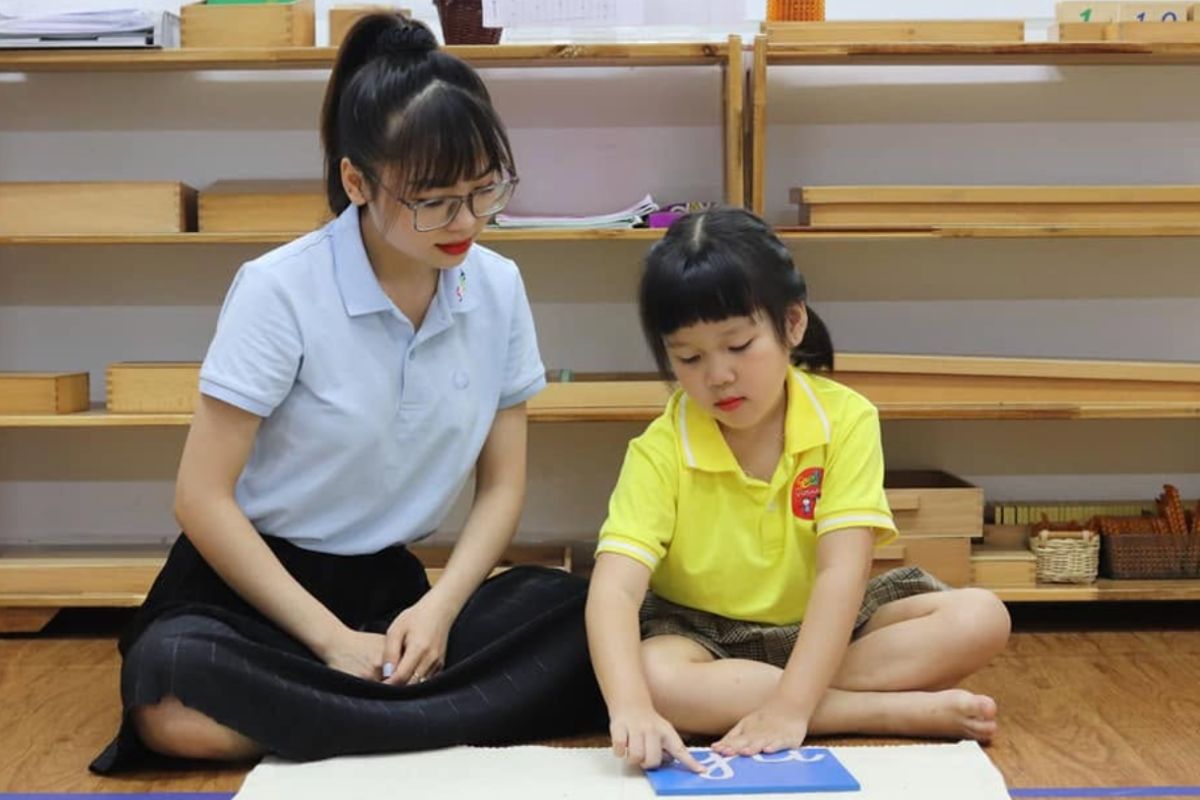
Young children need rich spoken language and meaningful experience before abstract symbols can carry real meaning. Bite-Size Montessori therefore treats language as something children hear, speak, touch, move through and understand—not simply something printed on a worksheet.
Experience first
Use real objects, purposeful action, stories, songs and familiar situations to create meaning.
Name and describe
Enrich vocabulary through precise, respectful language and short presentations.
Notice sounds and patterns
Invite the child to listen, compare and discriminate before expecting formal decoding.
Move toward symbols when ready
Connect sound and meaning to appropriate written symbols, word building, reading and writing without rushing the sequence.
One Foundation • Two Language Pathways
Bite-Size Montessori supports both Filipino and English Reading & Writing.
The shared foundation stays the same: observation, movement, order, oral language, sensory discrimination, fine-motor preparation and meaningful experience. The later instructional pathway changes according to the language.

Jolly Phonics + Jolly Classroom
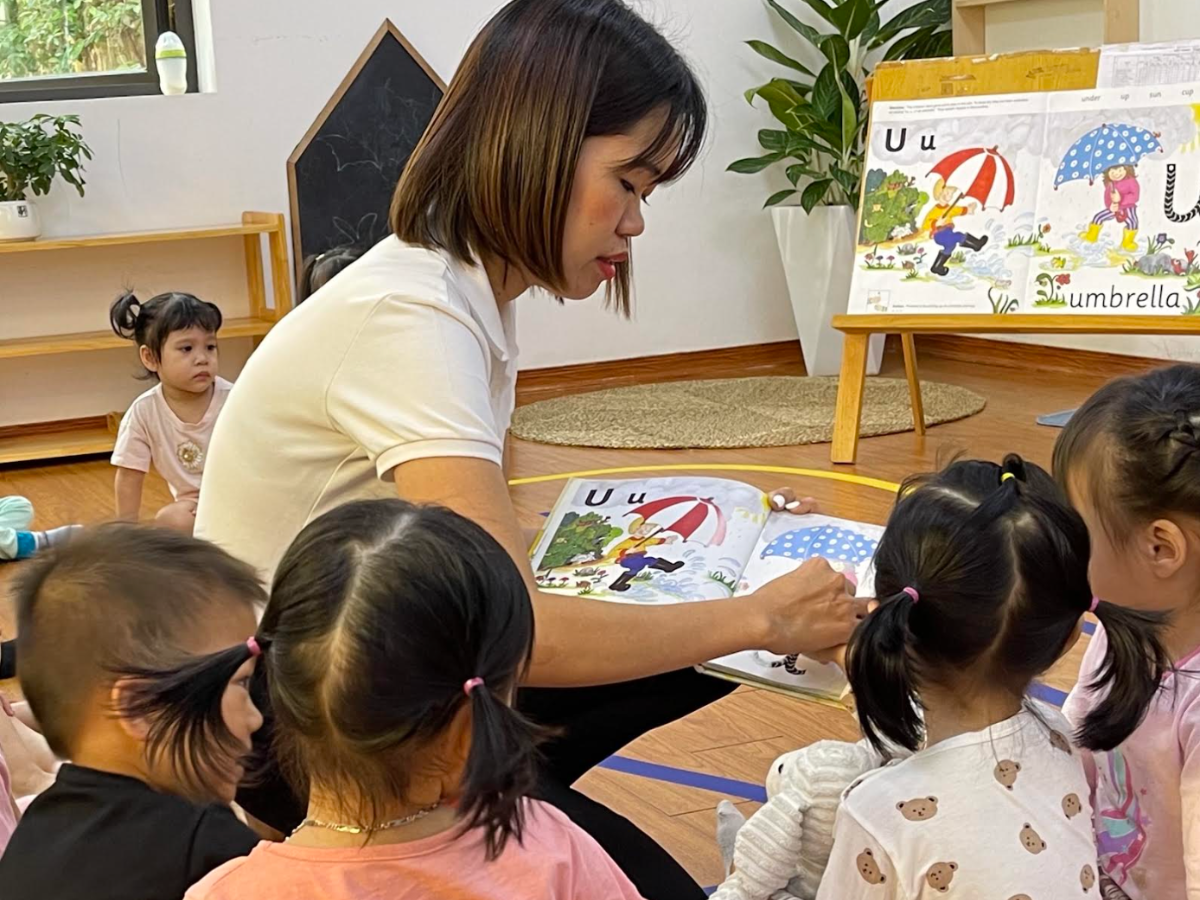
When developmentally appropriate, English instruction may move into systematic sound-symbol teaching, letter formation, blending, segmenting, tricky words, reading and writing with teacher-led digital support.
Bite-Size Montessori
Practical Life • Sensorial • Oral Language • Sound Awareness • Fine Motor • Pre-Writing • Reading Readiness • Number Readiness • Observation • Prepared Environment
Not a forced sequence: children and adults may enter the SEELS pathway where the actual need is clearest.
Tunog at Pantig
When developmentally appropriate, Filipino instruction may move into tunog, titik, pantig, salita, pangungusap, pagbasa at pagsulat according to Filipino sound, syllable and word-building structures.
English Reading & Writing
Filipino Reading & Writing
The Strong Beginning “Piggy Bank”
Every sound, word and purposeful experience can become a learning deposit.
SEELS uses a simple piggy-bank metaphor to help adults see that Reading & Writing foundations are built gradually. The “deposits” are not money. They are visible experiences, abilities, vocabulary, movement, language and evidence of what the child can increasingly do.
Bawat tunog, pantig at salita ay munting ipon.
Bawat karanasan sa pagbasa at pagsulat ay dagdag na puhunan.
Sa edad 0–6, unti-unti nating binubuo ang matibay na pundasyon ng pagbasa at pagsulat sa Filipino, English at iba pang wika. Ito ang Strong Beginning Reading & Writing—isang alkansiya ng kaalaman, kakayahan at wika na nagiging yaman ng bata habambuhay.
Beyond Language
Early numeracy grows from order, quantity and concrete experience.
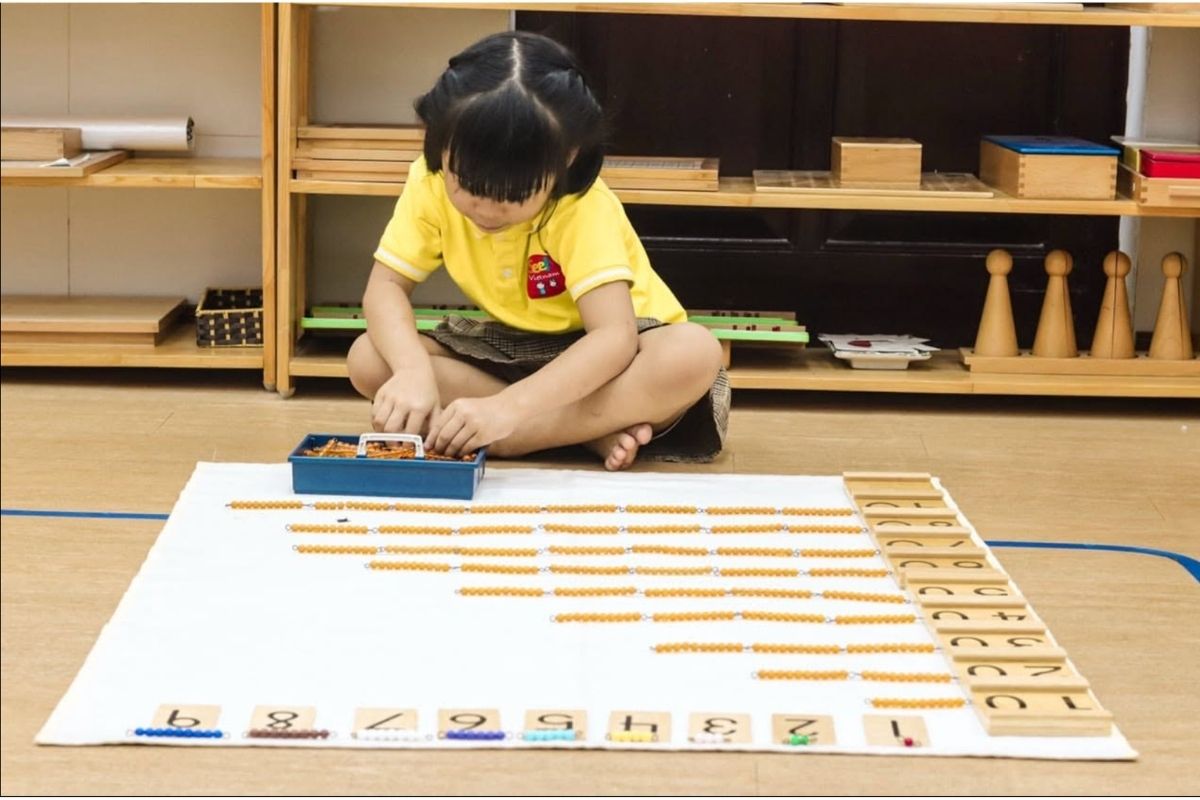
Bite-Size Montessori also recognizes that early mathematical thinking develops through the same prepared environment: children sort, match, sequence, compare, count and connect quantity with symbols before abstract arithmetic is expected.
- Order and sequence
- One-to-one matching
- Sorting and classification
- Counting with concrete objects
- Quantity awareness
- Number-symbol recognition when ready
- Concrete-to-abstract preparation
Bite-Size Montessori is an introductory readiness pathway. It is not presented as a complete Montessori mathematics curriculum.
Bite-Size Implementation
Observe first. Prepare carefully. Present simply. Repeat meaningfully.
“Bite-size” describes a manageable implementation approach—not a shortcut around child development. Adults begin with a small number of purposeful activities, observe the child closely and expand only when interest and readiness are visible.
What a responsible session feels like
Calm rather than hurried. Concrete before abstract. Short presentations followed by meaningful child activity. Language connected to real objects and experiences. Adults observe rather than over-correct.
The goal is not to make a very young child perform schoolwork early. The goal is to prepare capacities that make later Reading & Writing, mathematics and classroom participation more natural and more understandable.
Who Can Use the Framework?
One early foundation that can travel between home, tutorial center, school and community.
Bite-Size Montessori is designed to make developmentally appropriate preparation understandable and usable by adults who support young children in different settings.
Use ordinary routines, conversation, stories and purposeful activities to make the home a richer early-learning environment.
Connect observation, Practical Life, Sensorial work and language preparation before formal skill instruction.
Move beyond homework help and offer a clearer early-foundation pathway for young children and their parents.
Strengthen prepared environments, teacher formation, parent explanation and the transition toward Filipino and English Reading & Writing.
Explore small parent-child orientations, teacher development, neighborhood learning activities and community partnerships within agreed scope and safeguards.
Prepare the Adult, Too
Bite-Size Montessori is also a teacher- and parent-formation pathway.
Adults need more than a list of activities. They need to understand why an activity is presented, what it prepares, how to observe the child's response, when to repeat, when to pause and when a more explicit Reading & Writing step is appropriate.
SEELS may use a combination of training manual, teacher handbook, guided workbook activities, lesson planning, demonstration, reflection, selected child-learning materials and implementation templates according to the announced training format.
A practical teacher-development pathway: adults may begin with the SEELS Introductory Course (IC). After IC, those who want greater confidence in Montessori philosophy, observation, prepared-environment practice and classroom application are encouraged to continue through the Digital Montessori Education (DME) pathway before or alongside more specialized Reading & Writing implementation.
DME is an encouraged professional-development step, not a mandatory prerequisite for every Bite-Size Montessori, JCAT or Tunog at Pantig participant.
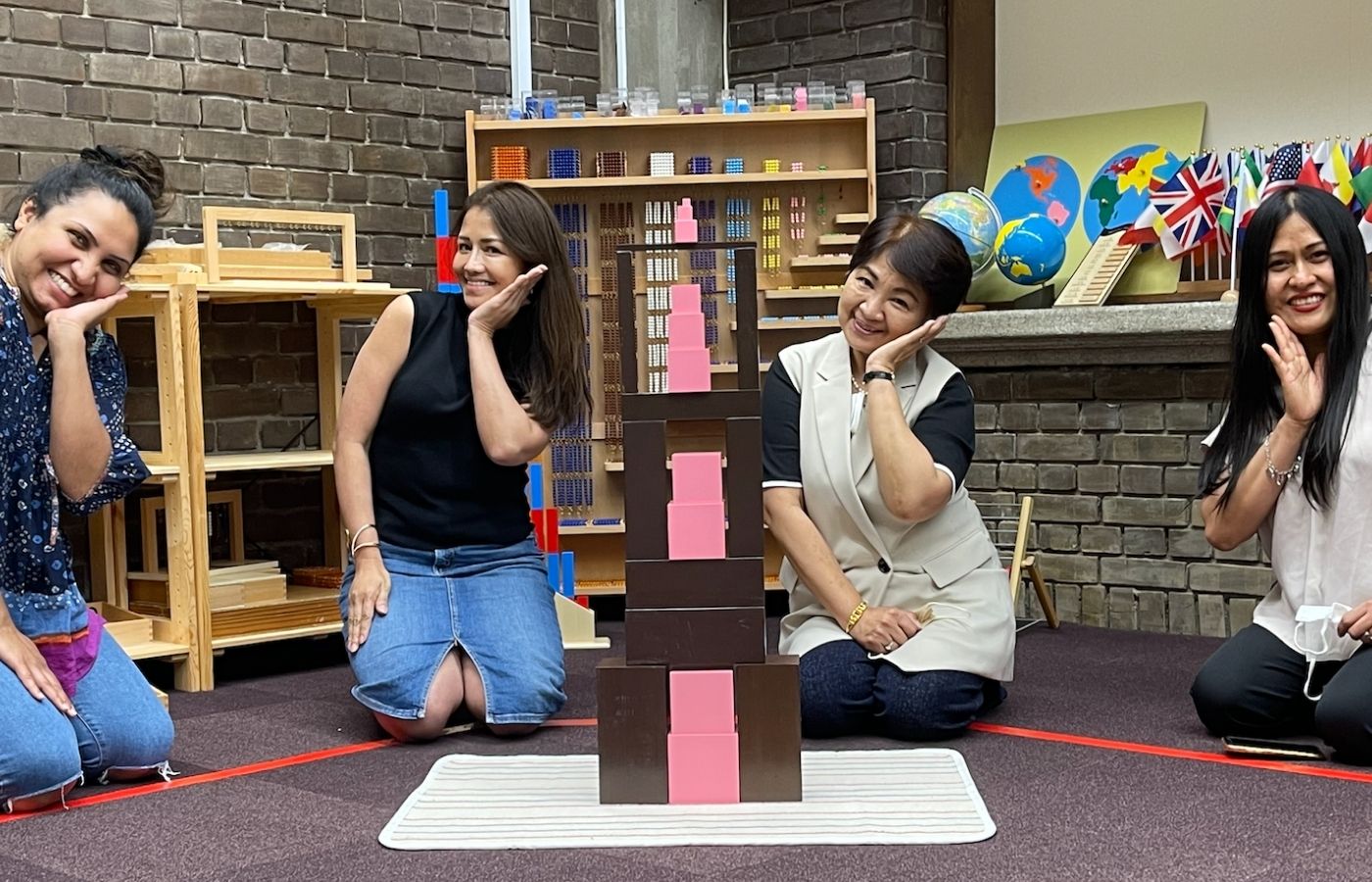
Training & Implementation Resources
Build understanding first, then use materials with purpose.
SEELS materials are intended to help adults connect theory with practical observation and application. Exact inclusions depend on the announced course, school arrangement or implementation package.
- Teacher training manual or reference readings
- Teacher handbook / quick classroom reference
- Teacher workbook and reflection activities
- Lesson-planning and observation templates
- Practical Life activity guides
- Sensorial and language-preparation guides
- Parent-home activity suggestions
- Selected learner activity materials where applicable
- Demonstration and microteaching outputs
- Portfolio / implementation evidence templates
Program Scope & Integrity
Clear boundaries protect children, families and educators.
What Bite-Size Montessori is
- A short, practical Montessori-informed foundation for adults supporting young children.
- A shared preparation for both Filipino and English Reading & Writing.
- A way to connect Practical Life, Sensorial, language, hand preparation and early number readiness.
- An observation-led approach that can be adapted to home, tutorial, school and community settings.
- A possible foundation before deeper SEELS teacher-development or language-specific pathways.
What it does not automatically provide
- It is not an AMI or AMS Montessori diploma, orientation certificate or teacher credential.
- It does not replace a complete Montessori 3–6 curriculum or the SEELS Digital Montessori Education specialist pathway.
- It does not guarantee that every child will read or write by a particular age.
- It is not a required prerequisite for every Jolly Phonics, Jolly Classroom or Tunog at Pantig participant.
- It does not replace permits, professional qualifications or child-protection requirements applicable to a school or learning provider.
Continue Only When the Need Is Clear
Bite-Size Montessori can stand on its own—or connect to a wider SEELS pathway.
The next step depends on the child, teacher, language and learning setting. SEELS does not require every participant to complete every program.
Public Reference Context
Montessori development and the SEELS Reading & Writing pathway.
These references provide public context for the developmental and Montessori concepts used on this page. They do not imply AMI endorsement, accreditation or authorization of Bite-Size Montessori.
- Association Montessori Internationale — Montessori 3–6
- Association Montessori Internationale — Transitioning from the Absorbent Mind
- Association Montessori Internationale — Glossary of Montessori Terms
- Association Montessori Internationale — Indirect Preparations for Handwriting
- SEELS Philippines — Montessori Language and Jolly Phonics Introductory Course
- SEELS Philippines — Digital Montessori Education
- SEELS Philippines — Jolly Classroom Onboarding Course
- SEELS Philippines — Strong Beginning Reading & Writing and Education Talent Development
Frequently Asked Questions
Direct answers about Bite-Size Montessori.
How does Bite-Size Montessori support later Reading & Writing?
Bite-Size Montessori provides a shared Montessori-informed foundation for Strong Beginning Reading & Writing. It helps young children develop oral language, sound awareness, movement, fine-motor control, sensorial discrimination and early language readiness before more explicit Reading & Writing instruction. As children grow and become ready, these foundations may support Filipino learning through Tunog at Pantig and English learning through Jolly Phonics, Jolly Classroom or other appropriate English instruction.
Why is SEELS developing Bite-Size Montessori in the Philippines?
SEELS developed Bite-Size Montessori as an early-childhood response to the need for stronger Reading & Writing foundations. We also want to make foundational Montessori principles more accessible to families, teachers, tutorial centers, schools and communities, while raising public awareness that Montessori is a child-development philosophy and method—not simply a collection of classroom materials.
What age is Bite-Size Montessori for?
The main SEELS Bite-Size Montessori focus is approximately 2.5–4 years old. Age is a guide rather than a rigid academic deadline. Observation, readiness, interest, movement, language experience and the child's individual development remain important.
Does the 0–6 message mean babies should be formally taught to read?
No. The 0–6 continuum begins with relationships, spoken language, songs, stories, movement, order and meaningful experience. More explicit sound-symbol, handwriting, reading and writing work comes later when developmentally appropriate.
Is Bite-Size Montessori only about Reading & Writing?
No. Reading & Writing is a major SEELS public mission, but Bite-Size Montessori also includes independence, Practical Life, Sensorial preparation, fine-motor development, order, matching, sequencing, counting, quantity and number readiness.
Can parents use Bite-Size Montessori at home?
Yes. Parents can use developmentally appropriate routines, conversation, stories, matching, sorting, movement and practical activities at home. The aim is not to recreate an entire Montessori school inside the home, but to understand how purposeful environments and adult responses support development.
Can tutorial centers and small schools use it?
Yes. A center or school may use Bite-Size Montessori as an early-foundation component within an agreed staff-development or pilot arrangement. Institutions remain responsible for applicable permits, safeguarding, staffing, supervision and regulatory requirements.
Does Bite-Size Montessori make someone a certified Montessori teacher?
No. Bite-Size Montessori is a SEELS Montessori-informed introductory/modular pathway. It is not an AMI or AMS diploma and does not by itself qualify a participant to represent themselves as an AMI-trained, AMS-trained or otherwise externally certified Montessori teacher.
Must a child continue to Tunog at Pantig or Jolly Phonics afterward?
No. The next step depends on the child and learning context. Bite-Size Montessori may stand alone as a foundation. Filipino and English pathways should be chosen according to readiness, language needs and the adult's teaching plan.
What teacher-development step is encouraged after the SEELS Introductory Course?
Participants who complete IC and want greater confidence in Montessori philosophy, observation, prepared environments and practical classroom application are encouraged to continue through the Digital Montessori Education (DME) pathway. DME is a recommended professional-development step rather than a mandatory prerequisite for every later SEELS program.
How does this connect to Strong Beginning Reading & Writing?
Bite-Size Montessori prepares many of the capacities that make later Reading & Writing possible: listening, vocabulary, sound awareness, movement, sensory discrimination, hand control, order, concentration and meaningful interaction. These are the early “learning deposits” in the SEELS Strong Beginning Reading & Writing framework.
Start Small • Prepare Well
Explore Bite-Size Montessori for your child, teaching practice, center, school or community.
Tell SEELS who you serve, the children's approximate age, your location and whether you are exploring parent guidance, teacher formation, tutorial-center implementation, school development or a community orientation.