Understand the Filipino literacy foundation
Study the progression from oral language and sound awareness to letters, syllables, words, sentences, reading, writing, and comprehension.

Tunog at Pantig prepares the Filipino Reading & Writing teacher. SBRW supports the classroom. Learn a structured, language-appropriate pathway from oral language and tunog to titik, pantig, salita, pangungusap, pagbasa, pagsulat, and kahulugan. Individual educators, schools, tutorial centers, home-learning programs, and community providers can then prepare for responsible implementation within the SEELS Strong Beginning Reading & Writing (SBRW) classroom system.
For younger children still building readiness: Bite-Size Montessori provides the shared Montessori-informed early foundation for oral language, movement, Sensorial experience, sound awareness, fine-motor control and pre-writing before more explicit Filipino or English Reading & Writing becomes developmentally appropriate.
Children need more than repeated copying or memorization. A teacher must understand how listening, speech sounds, letters, syllables, words, handwriting, reading, writing, and meaning are connected. Tunog at Pantig therefore serves as the common entry point before individual practice or institutional implementation.
Study the progression from oral language and sound awareness to letters, syllables, words, sentences, reading, writing, and comprehension.
Explore teacher language, manipulatives, multisensory activities, observation, gradual support, and purposeful practice rather than worksheet dependence.
Prepare one lesson sequence as an individual or one small pilot class as a participating school or tutorial center.
When ready to teach enrolled learners, connect Tunog at Pantig with SBRW for learner entry, parent orientation, classroom application, progress evidence, review, quality support, and appropriate professional progression.
Tunog at Pantig is the Filipino Reading & Writing pathway. For younger children who are still developing oral language, movement, concentration, sensory discrimination and hand control, SEELS uses Bite-Size Montessori as a shared Montessori-informed foundation that can later support either Filipino or English instruction. It is designed primarily for approximately ages 2.5–4 and is guided by readiness rather than a rigid age cutoff.

Bite-Size Montessori brings together Practical Life, Sensorial experience, oral language, sound awareness, fine-motor preparation, pre-writing, order, observation and early number readiness. These capacities are useful before the child is asked to do increasingly explicit symbol, word and sentence work.
The training uses one Filipino literacy foundation but leads to different first applications. Individual participants prepare for responsible teaching practice. Schools and tutorial centers prepare a manageable SBRW Filipino-literacy pilot and an evidence-informed decision about continued implementation.
For teachers, education students, teacher-candidates, parents, home tutors, online tutors, center staff, community educators, and other adults who want to support Filipino reading and writing.
For school owners, academic leaders, coordinators, tutorial-center managers, home-learning program heads, community providers, and teaching teams planning a structured Filipino literacy service.
The training may be delivered online or face-to-face according to the announced batch. Activities combine clear explanation, demonstrations, hands-on practice, lesson preparation, reflection, and planning for real learners.
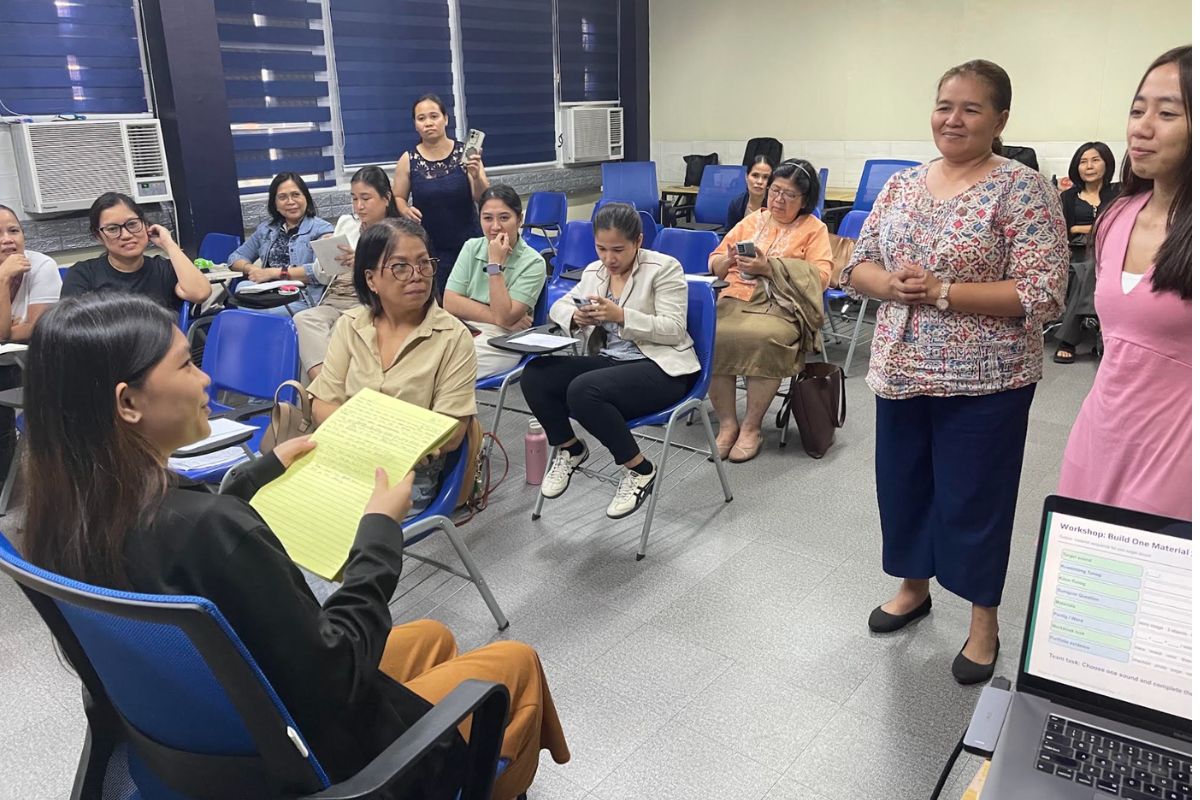
Understand the learning progression and practise the teacher’s response to what a child can already hear, say, recognize, connect, blend, write, read, or understand.
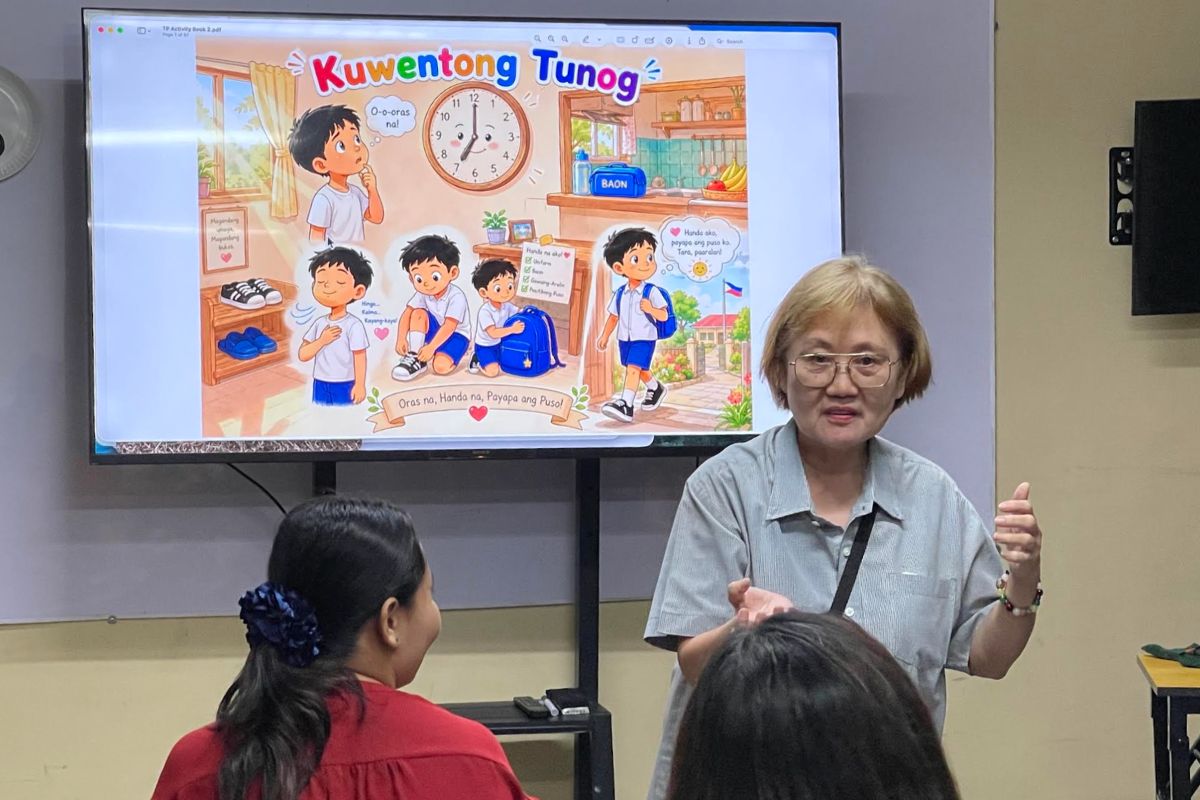
Turn the foundations into an organized teaching response, demonstrate a manageable activity, and prepare the first lesson or small institutional pilot.
Tunog at Pantig is not a translation of an English phonics course. It is a SEELS Filipino reading and writing foundations pathway that respects the language’s sound, letter, syllable, word, sentence, and meaning patterns while drawing on systematic and multisensory teaching principles.
Activities are organized around Filipino literacy development, not copied mechanically from an English sequence.
Learners hear, say, move, touch, arrange, trace, build, read, write, and use language meaningfully.
Teachers notice the child’s actual starting point and provide the least amount of help needed for progress.
Sound and syllable work supports the wider goal of understanding, expression, reading, writing, and participation.
Tunog at Pantig teacher training is delivered through four guided live-online sessions of three hours each, for a total of 12 training hours. The training fee prepares the teacher; any ongoing SBRW classroom implementation arrangement is separate unless expressly included in an announced package.
Exact starting dates are announced for each batch. Participants should attend all four sessions to complete the 12-hour training.
The underlying training component is ₱3,000 for four guided sessions at ₱750 per session and includes PDF training materials. Regular enrollment adds a ₱1,000 registration fee, for a regular total of ₱4,000. The training fee is not child tuition and does not by itself activate an ongoing SBRW classroom implementation service.
Training slots are confirmed only after the required registration and payment have been completed.
Enroll or Send an InquirySelect your preferred schedule and submit your enrollment details through the official SEELS registration form.
Enroll Now Enrollment is confirmed only after registration and payment verification.Tunog at Pantig is a distinct SEELS Filipino reading-and-writing pathway. It is not Jolly Phonics translated into Filipino. Its teaching sequence follows Filipino sound, letter, syllable, word, sentence, reading, writing, and meaning patterns.
SEELS Strong Beginning Reading & Writing (SBRW) is the broader implementation system that connects prepared teachers with learner starting-point observation, speaking-and-listening development, structured literacy lessons, hands-on reading-and-writing application, parent communication, learner evidence, quality review, and continuing support.
The SEELS Literacy Foundations Piggy Bank remains a useful metaphor for showing how demonstrated literacy capabilities accumulate over time. Within the revised program architecture, it is an evidence concept inside SBRW rather than a separate child-enrollment or implementation destination. Teachers observe what the child can actually do, record useful evidence, communicate progress, and use that information to plan the next step.
Listen, notice, distinguish, and use relevant Filipino speech sounds.
Connect sounds with written forms and practise purposeful formation.
Blend and segment manageable syllable patterns with growing control.
Build, read, write, and understand familiar and increasingly complex words.
Connect words into meaningful spoken and written expressions.
Read, write, communicate, reflect, and participate with understanding.

SBRW does not force Filipino and English into one identical method. It provides a common implementation layer—prepared teachers, learner observation, parent communication, visible progress, review, and quality support—while each language follows an appropriate instructional pathway.
The SEELS Filipino literacy pathway, organized around tunog, titik, pantig, salita, pangungusap, pagbasa, pagsulat, kahulugan, and meaningful classroom application.
The SEELS English teacher-onboarding pathway, preparing teachers to use Jolly Phonics through Jolly Classroom responsibly within SBRW English-literacy implementation.
A practical sequence connecting oral language, sound, letter, syllable, word, reading, writing, and meaning.
Sample explanations, prompts, questions, feedback, and ways to assist without taking over the child’s work.
A simple SBRW-aligned way to document the learner’s starting point, demonstrated Filipino literacy skills, challenges, progress, and next steps.
A realistic first lesson or SBRW Filipino-literacy pilot plan with responsibilities, schedule, materials, parent communication, learner evidence, and review points.
Tunog at Pantig training prepares the teacher; it does not require every participant to launch a class immediately. Those ready to teach enrolled learners may connect to the appropriate SBRW implementation pathway, while others may continue practising, building a portfolio, or deepening professional formation first.
Begin with a manageable learner group, clear schedule, prepared teacher, parent orientation, learner starting point, materials, evidence plan, and review date before considering expansion.
Share classroom practice, review portfolios and learner evidence using common tools, and participate in appropriate SEELS moderation or Tunog at Pantig quality-assurance activities as announced or agreed.
Depending on role and readiness, graduates may develop a portfolio, enter practicum, continue to Digital Montessori Education, support a learning provider, or develop literacy-leadership responsibilities.
SEELS may announce face-to-face or live-online batches. Current dates, venue, tuition, advance-registration arrangements, inclusions, materials, and payment conditions should be confirmed through the official registration form before payment.
Suitable for participants outside the host city and for partner groups prepared for guided online practice.
Suitable for hands-on material work, demonstrations, school teams, and local teacher-development events.
One adult participant may enter without representing a school or tutorial center.
A learning provider may enroll a leader, responsible teacher, or implementation team and begin with one pilot group.
No. Tunog at Pantig is a distinct SEELS Filipino reading and writing foundations pathway. It is organized around Filipino sound, letter, syllable, word, sentence, and meaning patterns. It may share broad principles such as systematic progression, multisensory activity, and careful observation, but it is not a translation of Jolly Phonics.
Bite-Size Montessori is the shared Montessori-informed early-childhood foundation in the SEELS Strong Beginning Reading & Writing direction. Designed primarily for approximately ages 2.5–4, it strengthens oral language, movement, Sensorial discrimination, sound awareness, fine-motor control, pre-writing and early number readiness. Tunog at Pantig is the later, readiness-based Filipino Reading & Writing pathway. Bite-Size Montessori is not a mandatory prerequisite for every Tunog at Pantig learner or teacher.
Yes. Adult teachers, education students, teacher-candidates, parents, home tutors, online tutors, community educators, and other literacy advocates may enter through the Individual Participant Track. The teacher training is not a two-day class designed directly for children.
Yes. A school or center may begin by training at least one responsible leader or teacher, identifying one target learner group, preparing the environment and materials, organizing a small pilot, recording evidence, and reviewing results before expanding.
It is a SEELS learner-evidence concept used inside the SBRW implementation system. Demonstrated skills in listening, sound awareness, letter-sound knowledge, syllable work, word reading, writing, sentence use, and meaning become documented learning deposits. The record guides the next lesson and helps communicate progress. It is not a financial account and is not a separate child-enrollment program.
No. The SEELS completion certificate records participation and completion of the announced Tunog at Pantig teacher-training requirements. It does not provide Philippine teacher licensure, government eligibility, guaranteed employment, or automatic institutional endorsement.
No. Tunog at Pantig is the Filipino literacy pathway, while JCAT prepares teachers for the English literacy pathway using Jolly Phonics through Jolly Classroom. They remain distinct and equally valued language pathways within the broader SEELS Strong Beginning Reading & Writing (SBRW) implementation system.
No. Tunog at Pantig is the Filipino literacy teacher-training and instructional pathway. SBRW is the broader classroom implementation system. A participant may complete Tunog at Pantig training for professional development without immediately operating an SBRW class. Active implementation with enrolled learners depends on the appropriate current provider, support, and implementation arrangements.
JCAT prepares teachers for the English literacy pathway using Jolly Phonics through Jolly Classroom. Tunog at Pantig prepares teachers for the Filipino literacy pathway. SBRW provides the shared implementation layer around both: learner entry, parent communication, lesson application, learner evidence, progress review, and quality support.
Depending on the batch and current SEELS arrangements, graduates may access shared templates, peer exchange, selected group mentoring, demonstration activities, implementation planning, portfolio guidance, or the SEELS Practice-to- Partnership Pathway. Individualized, on-site, customized, or resource-intensive services may require separate arrangements.
The provider should identify the learner group, responsible teacher, schedule, learning environment, materials, starting- point record, lesson sequence, parent communication, progress evidence, safeguarding expectations, and a review date before deciding whether to continue or expand.
Individual educators may take the 12-hour training to build Filipino Reading & Writing teaching capability. For younger children still developing readiness, Bite-Size Montessori offers the shared early foundation. Schools and tutorial centers may begin with the pathway that matches the learner need, then move into a manageable SBRW Filipino Reading & Writing pilot when the teacher, learner group, schedule, materials, parent communication, evidence process, and local implementation arrangements are ready.