2nd Weekend • SEELS Weekend Academy
Tunog at Pantig Weekend
Filipino Reading & Writing Teacher Training
Listen. Connect. Blend. Read. Write. Understand.
Help children build stronger Filipino literacy foundations through a structured, language-appropriate pathway from oral language and tunog to titik, pantig, salita, pangungusap, pagbasa, pagsulat, and kahulugan. The weekend prepares teachers and learning providers to move beyond copying and memorization toward observation, purposeful practice, lesson design and responsible first implementation.
Why Tunog at Pantig?
1
2
3
Do not begin with worksheets alone. Begin with how Filipino literacy develops.
Children need more than repeated copying or memorization. The teacher needs to understand how listening, speech sounds, letters, syllables, words, handwriting, reading, writing and meaning connect. Tunog at Pantig makes that progression visible and teachable.
Understand the Filipino literacy foundation
See how oral language and sound awareness connect to letters, syllables, words, sentences, reading, writing and comprehension.
Teach through structured, hands-on practice
Use teacher language, manipulatives, multisensory activity, observation and gradual assistance rather than worksheet dependence.
Prepare a manageable first application
Leave with a lesson sequence as an individual or a small-pilot implementation plan as a school or learning provider.
A Clear Learning Progression
From tunog toward meaningful reading and writing
The sequence is not a race through syllables. Each stage gives the teacher something to observe, strengthen and connect to the next meaningful literacy task.
Tunog
Hear, distinguish and reproduce useful speech sounds.
Titik
Connect sounds with their written representations.
Pantig
Blend and segment manageable syllable patterns.
Salita
Build and read increasingly meaningful words.
Pangungusap
Use words in connected spoken and written language.
Kahulugan
Read and write for understanding, expression and participation.
The Weekend Training Experience
Two connected days from literacy foundations to first implementation
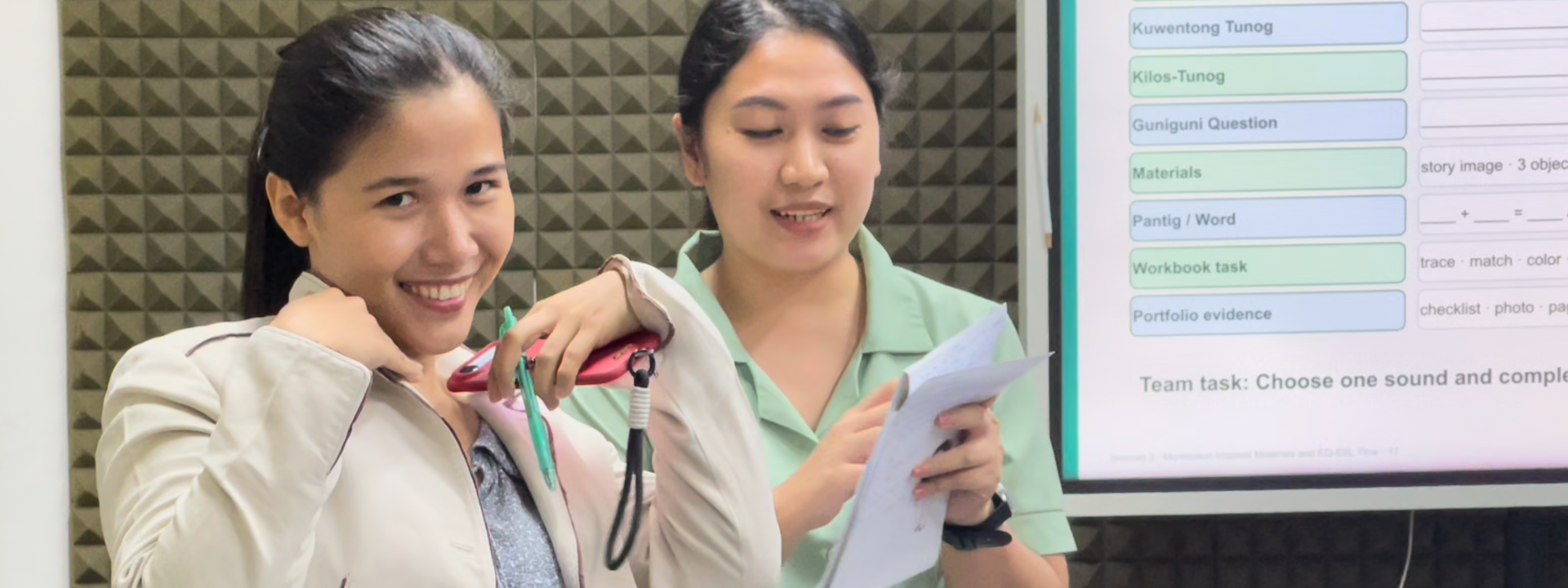
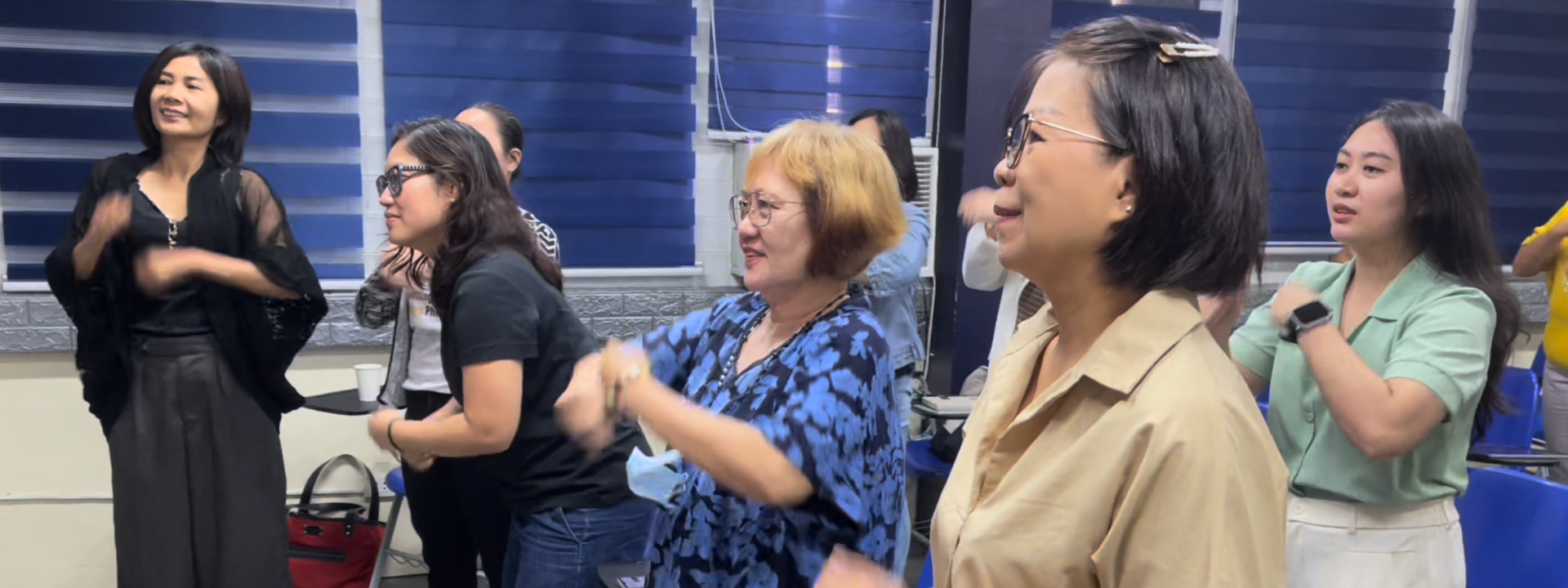
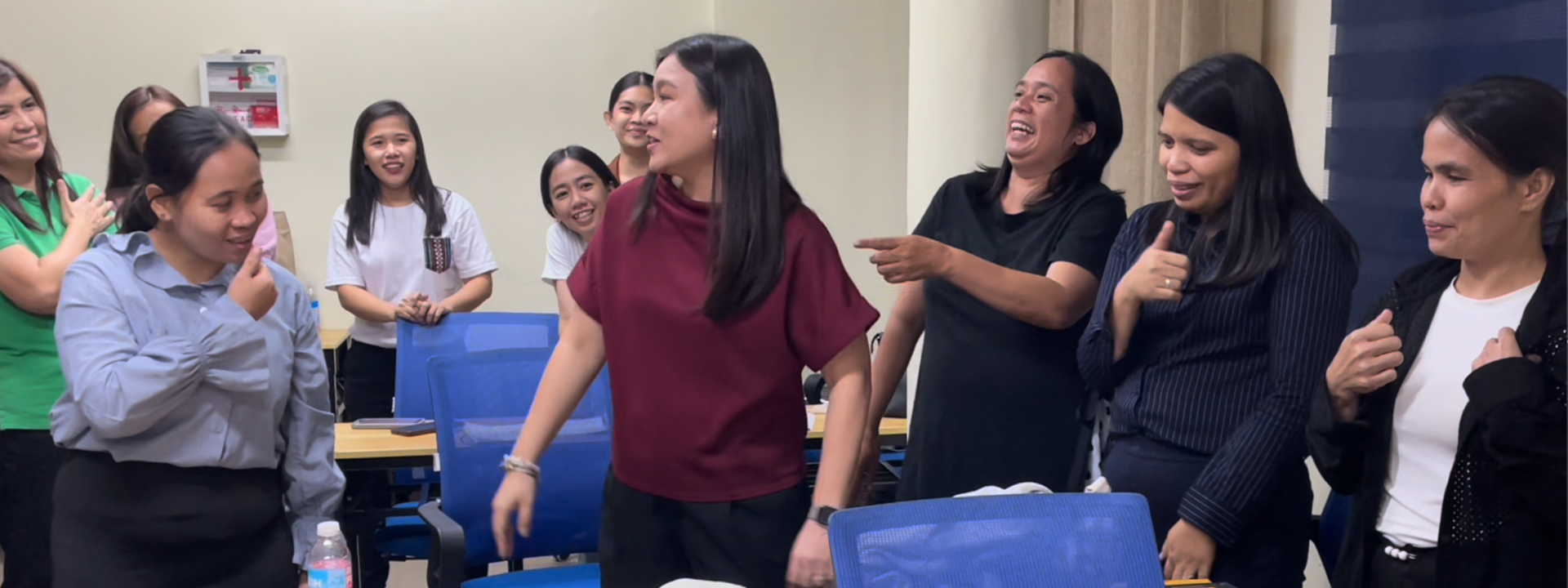
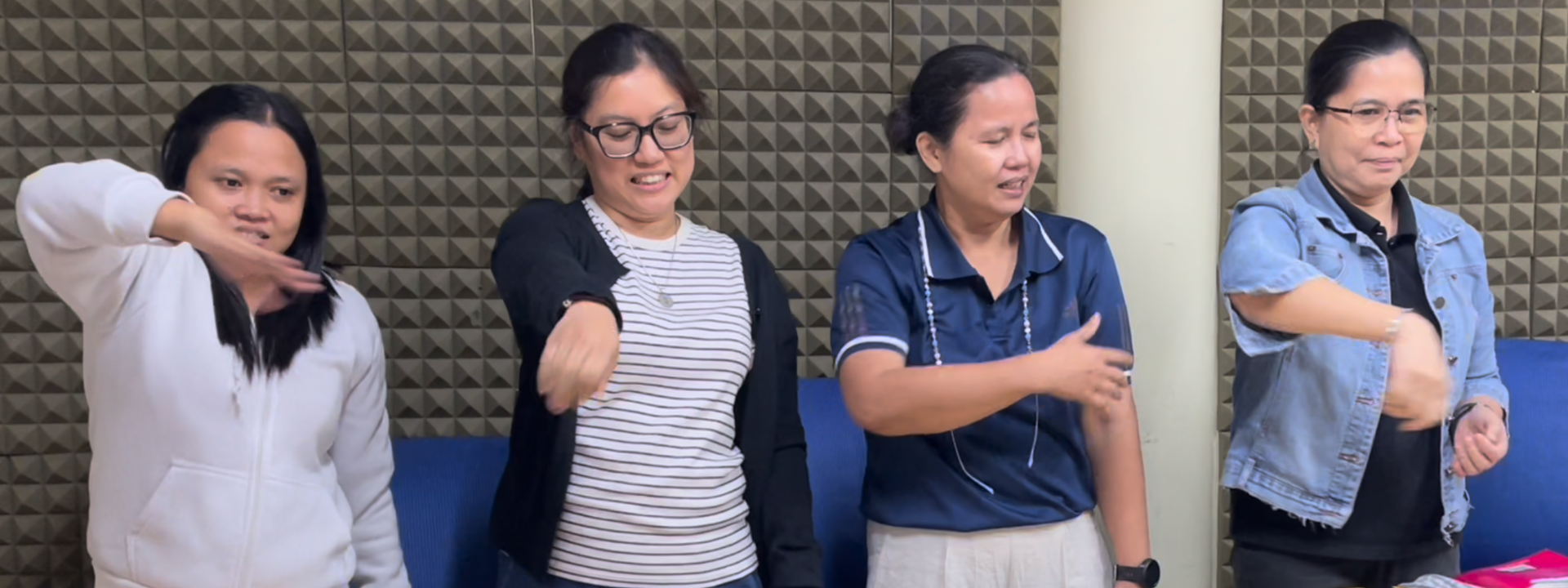
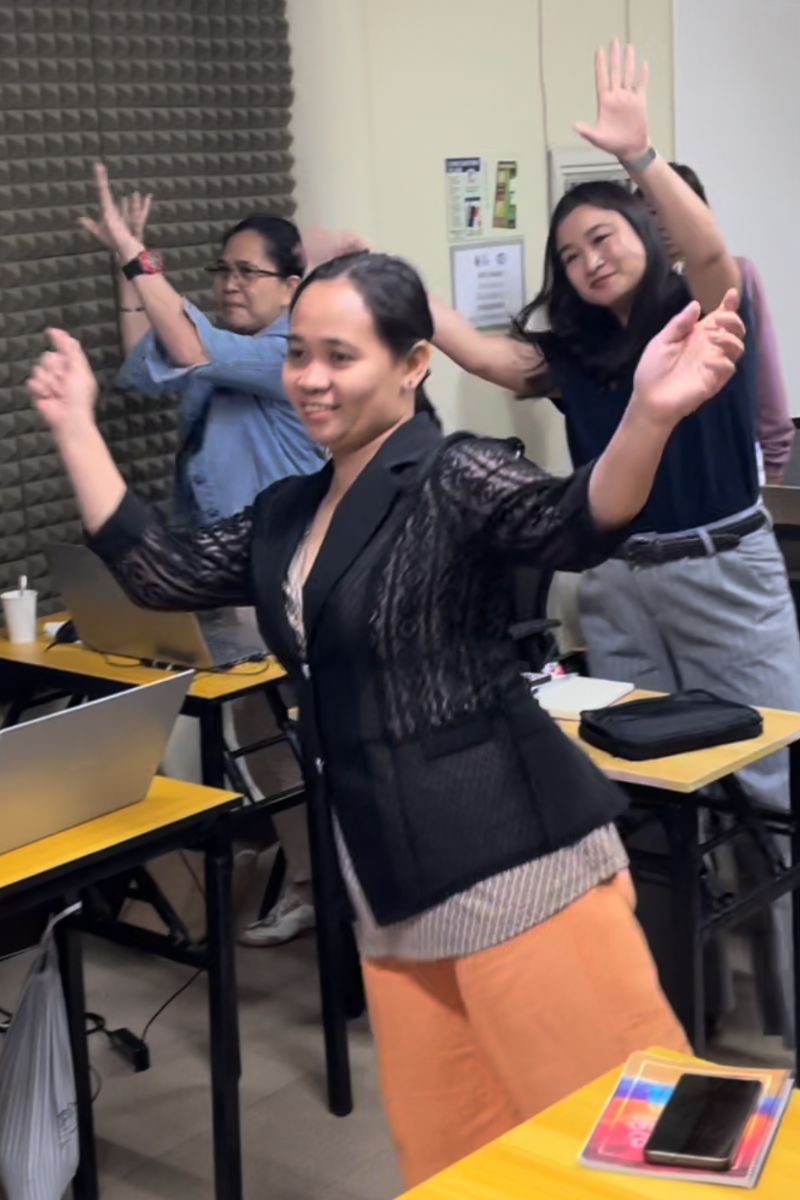
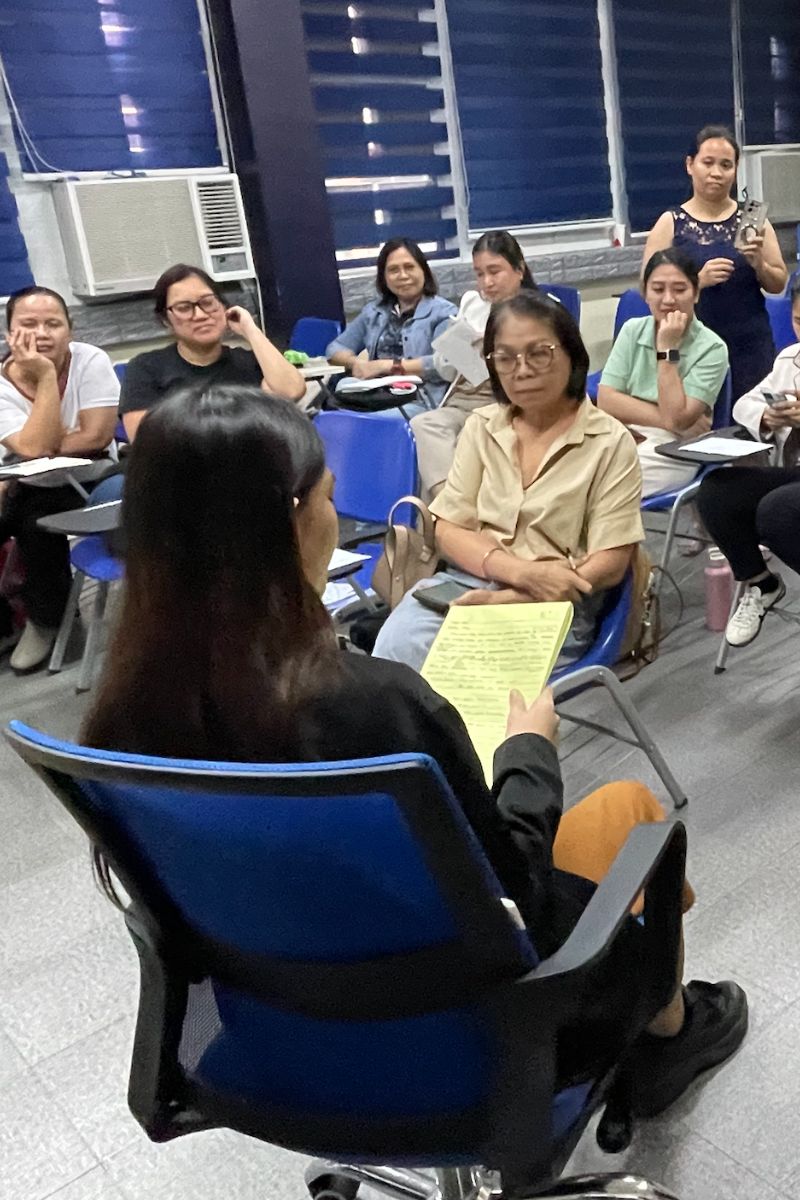
The Weekend Academy format combines explanation, demonstration, hands-on practice, lesson preparation, reflection and planning for real learners. The aim is not simply to finish a manual—it is to leave with a more deliberate way of observing and teaching.
Day 1
Filipino Literacy Foundations & Learner Observation
Understand the learning progression and practise responding to what a child can already hear, say, recognize, connect, blend, write, read or understand.
- Oral language, listening and sound awareness
- Filipino sounds and written representations
- From sound and letter to syllable and word
- Blending, segmenting, formation and early spelling
- Montessori-informed observation and hands-on activity
- Teacher language, gradual assistance and learner dignity
Day 2
Lesson Sequence, Demonstration & Pilot Preparation
Turn the foundations into an organized teaching response, demonstrate a manageable activity and prepare the first lesson or small institutional pilot.
- Structured lesson flow and classroom routines
- Speaking, listening, reading and writing connections
- Syllable, word, sentence and meaningful-text progression
- Learner starting-point and progress records
- Demonstration teaching and constructive peer feedback
- 30-, 60- and 90-day implementation planning
Expected first output:
an individual participant prepares one lesson or short sequence with a
reflection and simple progress record. A school or tutorial center
prepares one small-pilot plan identifying the learner group, teacher,
schedule, materials, parent communication, evidence and review point.
Two Connected Entry Tracks
Join as an individual—or bring a school or learning provider
Everyone shares the same Filipino literacy foundation, but the first application differs. Individuals build teaching readiness; schools and centers prepare a responsible first pilot or program decision.
Individual Participant Entry
For teachers, teacher-candidates, education students, parents, home tutors, online tutors and literacy advocates seeking a structured Filipino literacy foundation.
- Complete the two-day Weekend Academy training.
- Prepare one guided lesson or short sequence.
- Use observation and reflection to improve teaching.
- Explore after-training support, practicum or deeper professional formation.
School or Tutorial-Center Entry
For owners, school leaders, academic coordinators, tutorial-center managers, program heads and teacher teams considering a structured Filipino literacy service.
- Train at least one responsible leader or implementing teacher.
- Identify the target learner group and teaching setting.
- Prepare one small pilot before considering expansion.
- Plan parent communication, learner evidence and review.
What Guides the Teaching
Filipino-specific progression supported by observation and meaningful practice
Tunog at Pantig is not a translation of an English phonics course. It is a SEELS Filipino reading and writing foundations pathway that respects Filipino sound, letter, syllable, word, sentence and meaning patterns while drawing on systematic and multisensory teaching principles.
Activities are organized around Filipino literacy development rather than copied mechanically from an English sequence.
Learners hear, say, move, touch, arrange, trace, build, read, write and use language meaningfully.
Teachers notice the learner's actual starting point and provide the least amount of help needed for progress.
Sound and syllable work serves the wider goal of understanding, expression, reading, writing and participation.
For younger children still building readiness:
Bite-Size Montessori
provides a shared Montessori-informed early foundation for oral language,
movement, sensorial discrimination, sound awareness, fine-motor control
and pre-writing. It is not a mandatory prerequisite for every Tunog at Pantig participant or learner.
Weekend Academy Schedule & Fee
Reserve the second weekend for Filipino literacy
This page presents the face-to-face Weekend Academy format at EGI Taft, Manila. Exact batch dates, daily start and end times, preparation instructions and seat availability are confirmed in the official announcement.
Tunog at Pantig Weekend
Two connected face-to-face training days
When
Selected 2nd Saturday–Sunday of the month
Where
SEELS Weekend Academy • EGI Taft, Manila
Training Time
Approximately 12 guided training hours across the two days
Cohort
Small-group format for practical participation and feedback
Need a live-online or institutional arrangement instead? The main Tunog at Pantig pathway may also be announced in other formats. View the full Tunog at Pantig pathway.
Payment and Refund Policy
- Full payment confirms the participant's place in the selected training batch.
- Cancellation requests received at least seven days before the first training day may be transferred once to another available batch or refunded, less applicable payment-processing charges.
- Payments are non-refundable within seven days of the starting date, after training has begun or in cases of non-attendance.
- The training payment covers the announced Tunog at Pantig teacher-training batch. Child tuition, local provider charges, ongoing SBRW classroom implementation, specialized mentoring and other separately announced services are not included unless stated in writing.
- If SEELS cancels the training, participants may receive a full refund or transfer their payment to another available batch.
After the Weekend
Training should lead somewhere
Completion is the beginning of application—not automatic authorization to open a class, guaranteed employment or an immediate full-center rollout. Participants can practise first, document evidence and move into a more suitable implementation pathway when ready.
Step 1
Train
Build the Filipino literacy foundation and practise the teaching sequence.
Step 2
Practise & Observe
Prepare a lesson, rehearse, observe learner response and record what happens.
Step 3
Implement Carefully
When ready, connect the Filipino pathway to appropriate SBRW classroom implementation and review.
Literacy Foundations Piggy Bank
SEELS uses the Piggy Bank as a learner-evidence concept: demonstrated literacy skills become visible "learning deposits" that help teachers plan the next step and communicate progress. It is not a financial account.
Explore the evidence concept →Strong Beginning Reading & Writing (SBRW)
Tunog at Pantig prepares the Filipino literacy teacher. SBRW is the broader implementation system that can add learner entry, parent communication, progress evidence, review and continuing support.
Explore SBRW →
Clear Course Boundaries
Professional development—not a government teaching licence
The course builds knowledge and practice. Any employment, practicum, institutional implementation or additional service remains subject to separate requirements, capacity and written arrangements.
Included in the Weekend Training
- Filipino literacy foundations and progression
- Observation and teacher-response practice
- Demonstrations and hands-on activities
- Lesson-sequence or small-pilot planning
- Introduction to learner-evidence documentation
- SEELS completion record subject to announced requirements
Separate When Applicable
- Child tuition and learner enrollment
- One-to-one coaching or formal teaching assessment
- On-site school visits and customized institutional training
- Practicum placement or classroom access
- Employment, teacher referral or institutional endorsement
- DME, TEYL, TESOL or other advanced-program tuition
Frequently Asked Questions
Understanding the Tunog at Pantig Weekend
Is Tunog at Pantig the same as Jolly Phonics translated into Filipino?
No. Tunog at Pantig is a distinct SEELS Filipino reading and writing foundations pathway organized around Filipino sound, letter, syllable, word, sentence and meaning patterns. It may share broad principles such as systematic progression, multisensory activity and careful observation, but it is not a translation of Jolly Phonics.
Who may join the Weekend Academy training?
Adult teachers, education students, teacher-candidates, parents, home tutors, online tutors, tutorial-center staff, school leaders and other literacy advocates may join. Schools and learning providers may also enroll a responsible leader or teacher as a first step toward a small pilot.
Is the weekend training a class for children?
No. This page is for adult teacher training and professional development. Any child-facing class, tuition or SBRW implementation arrangement is separate unless expressly included in an announced package.
Where does Bite-Size Montessori fit?
Bite-Size Montessori provides a shared Montessori-informed early-childhood foundation for younger children who are still strengthening oral language, movement, sensorial discrimination, sound awareness, fine-motor control and pre-writing. It is not a mandatory prerequisite for every Tunog at Pantig participant or learner.
Does completing the course make someone a licensed or certified Filipino teacher?
No. The SEELS completion record documents participation and completion of the announced Tunog at Pantig professional-development requirements. It does not provide Philippine teacher licensure, government eligibility, guaranteed employment or automatic institutional endorsement.
Can a school or tutorial center start with a small pilot?
Yes. A learning provider may train a responsible teacher or leader, identify one learner group, prepare the environment and materials, organize a manageable pilot, document implementation and review evidence before deciding whether to expand.
What happens after the weekend?
Participants may continue practising, build a portfolio, join available peer or group support, prepare for implementation, explore SBRW, or continue to other professional pathways depending on role and readiness. Separate services may have separate requirements and fees.
Register for Tunog at Pantig
Reserve your place in a Tunog at Pantig Weekend.
Submit this registration first. No payment is taken on this page. SEELS will send the next available batch details, preparation instructions and payment information using the contact details you provide.
Weekend Format
Selected 2nd Saturday–Sunday • approximately 12 guided hours
Venue
SEELS Weekend Academy • EGI Taft, Manila
Training Fee
₱4,000 for the announced two-day teacher-training batch
Seat Confirmation
Your place is confirmed after payment has been received and acknowledged by SEELS.
Not Ready to Register?
Ask Us About Tunog at Pantig First.
Ask about the next second-weekend batch, course suitability, Filipino literacy content, payment, school or learning-center participation, live-online options, or what happens after training.
You do not need to decide today. Tell us what you are trying to
teach, improve or build, and SEELS can clarify whether Tunog at
Pantig is the appropriate starting point.
Your 2nd Weekend Learning Path
Start with the teacher. Build stronger Filipino literacy from there.
Register when you are ready, or ask us first. Tunog at Pantig Weekend is designed to help educators understand the Filipino literacy progression, practise it responsibly and prepare for a realistic next step with learners.